water
The solvent carrying every dissolved acid, salt, sugar, alcohol and aroma precursor.
A long-form field guide to the journey from berry to bottle: how climate, farming, microbes, extraction, oxygen and time become the structure and aroma of a wine.
Fruit, chemistry and perception
Wine is fermented grape juice, but that short definition hides a moving mixture of water, ethanol, acids, sugar, phenolics and hundreds of volatile compounds.
The liquid itself
We make wine by asking yeast to eat the sugar in ripe grapes. That sounds simple until the grape, vineyard, microbes, oxygen, vessel and time all begin pulling the result in different directions. Even after bottling, slow reactions keep changing aroma, colour and texture.
Water is the bulk of the drink. Ethanol is more than the part that makes us tipsy: it changes body, warmth, volatility and how sweetness or bitterness feels. Tartaric and malic acids give the young wine its sharp frame. Lactic acid may replace some malic acid later, while acetic acid is useful in tiny amounts and vinegary when it escapes control.
Total acidity tells us roughly how much titratable acid is present. pH tells us about hydrogen-ion activity and therefore microbial stability, colour behaviour and how effective sulfur dioxide can be. Two wines can taste similarly sharp while behaving very differently in the cellar.
The solvent carrying every dissolved acid, salt, sugar, alcohol and aroma precursor.
Adds warmth, body and volatility; it changes how both sweetness and bitterness are perceived.
Mostly tartaric and malic before malolactic conversion. pH and total acid describe different things.
Dry wine can contain a little sugar; sweet wine depends on the balance between sugar, acid, alcohol and bitterness.
Wine style is the balance between these sensations, not one flavour note.
Berry to must
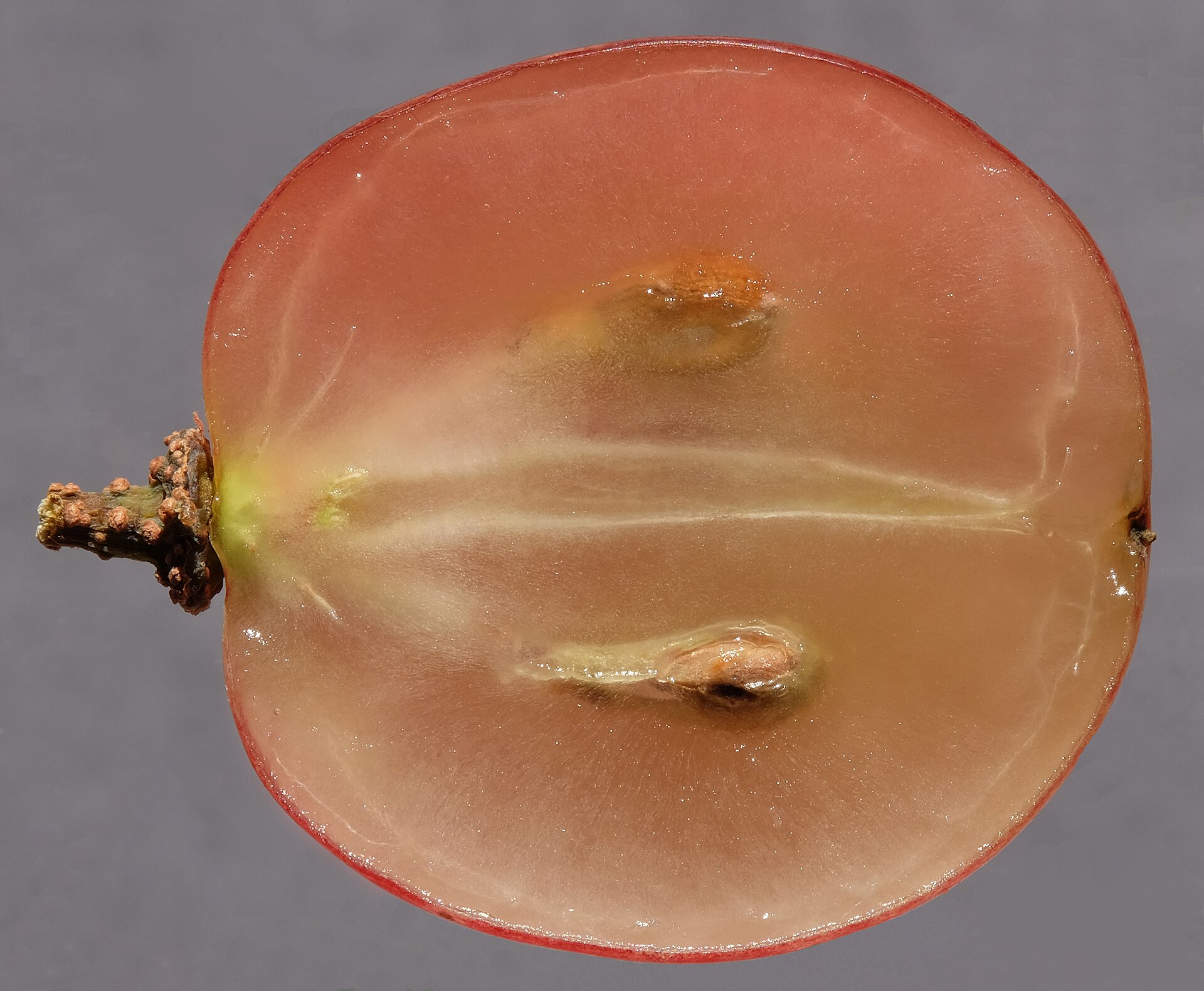
Pulp is mostly water, glucose, fructose and acids. Sugar rises through ripening as malic acid is respired away. Tartaric acid is more stable, which is one reason it remains so important in finished wine.
Anthocyanins colour black grapes. Tannins and other phenolics build bitterness, astringency and ageing reactions. Terpenes, thiol precursors, methoxypyrazines and many other aroma precursors also sit in or near the skin, so pressing and maceration are flavour decisions as much as colour decisions.
Seeds contain concentrated tannin and bitter compounds. Ripe stems can add perfume, freshness and structure in whole-bunch fermentation; green stems can taste aggressively herbal. A winemaker is constantly deciding not only what to extract, but what to leave behind.
Book trail · Wined4 / Wine Production, grape composition, acidity, aroma compounds and wine structure chapters.
Vineyard and place
A grape variety brings a genetic range of possibilities. Climate, slope, soil, water, canopy and crop load decide which part of that range reaches the winery.
One crop, prepared across two seasons
A vintage lasts a season, but the crop does not begin at budburst. The buds that carry this year’s bunches were formed in the previous summer, and the carbohydrates that wake them were stored before the leaves fell. Each harvest is therefore an overlap between two years of weather and farming.
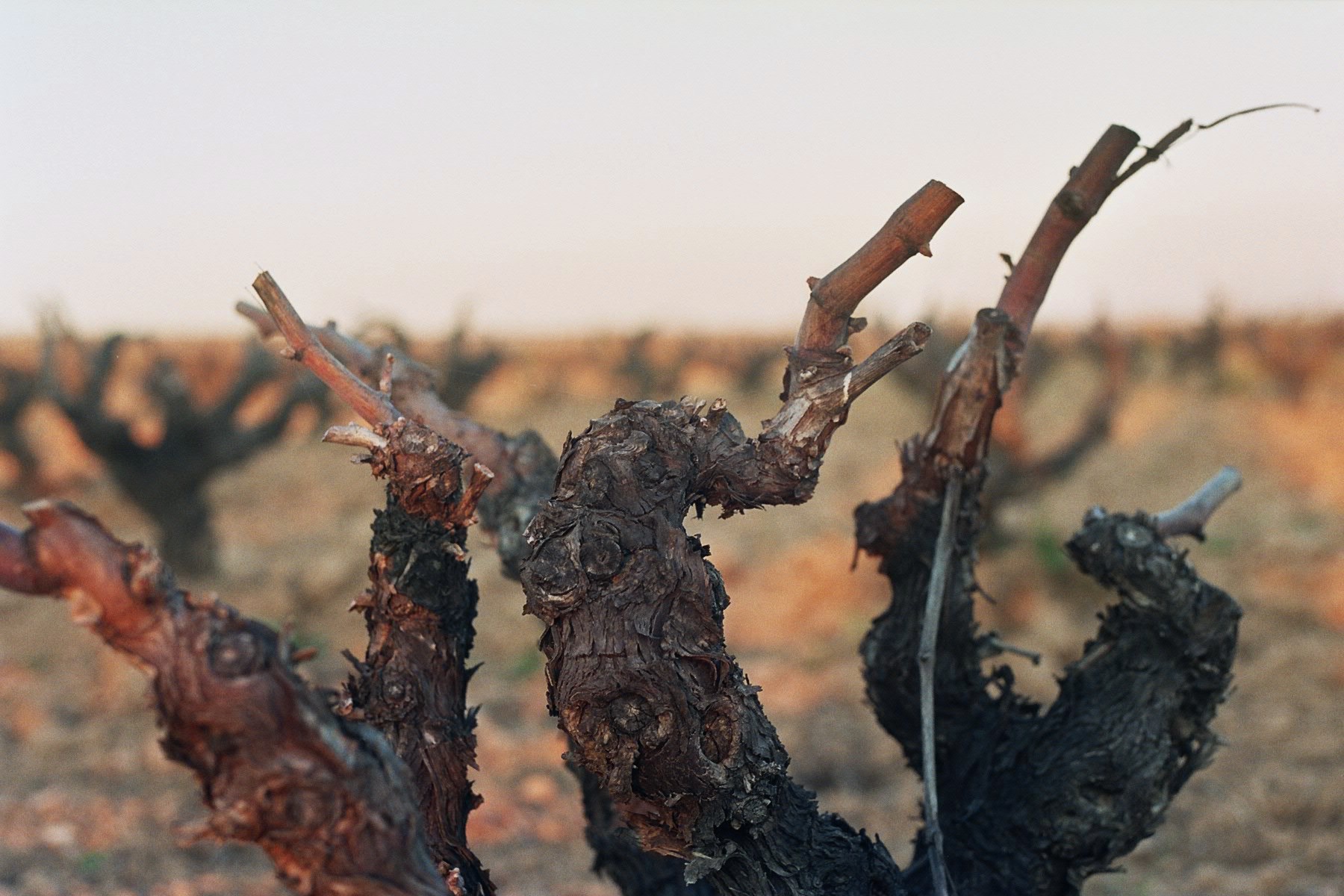
winter
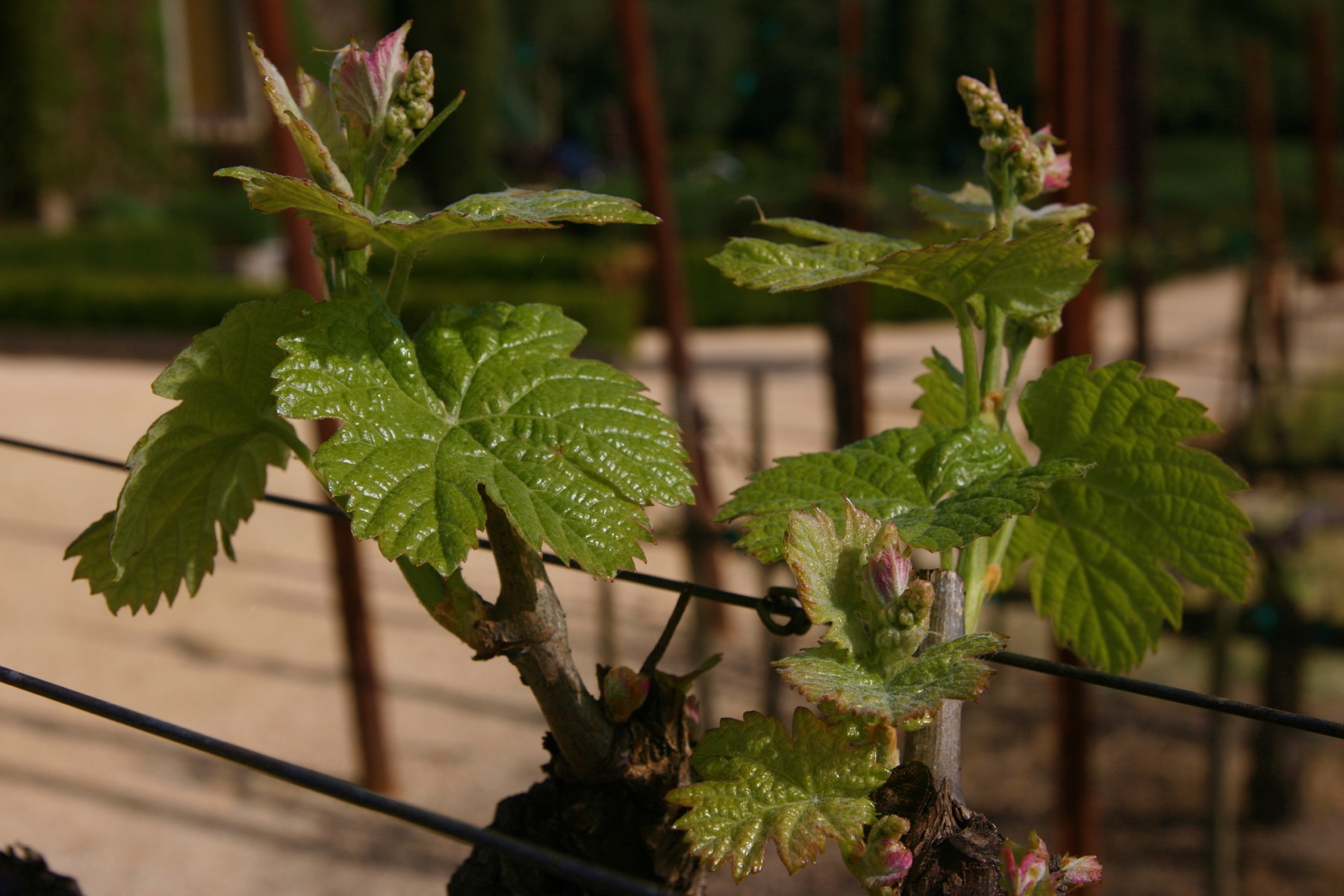
early spring
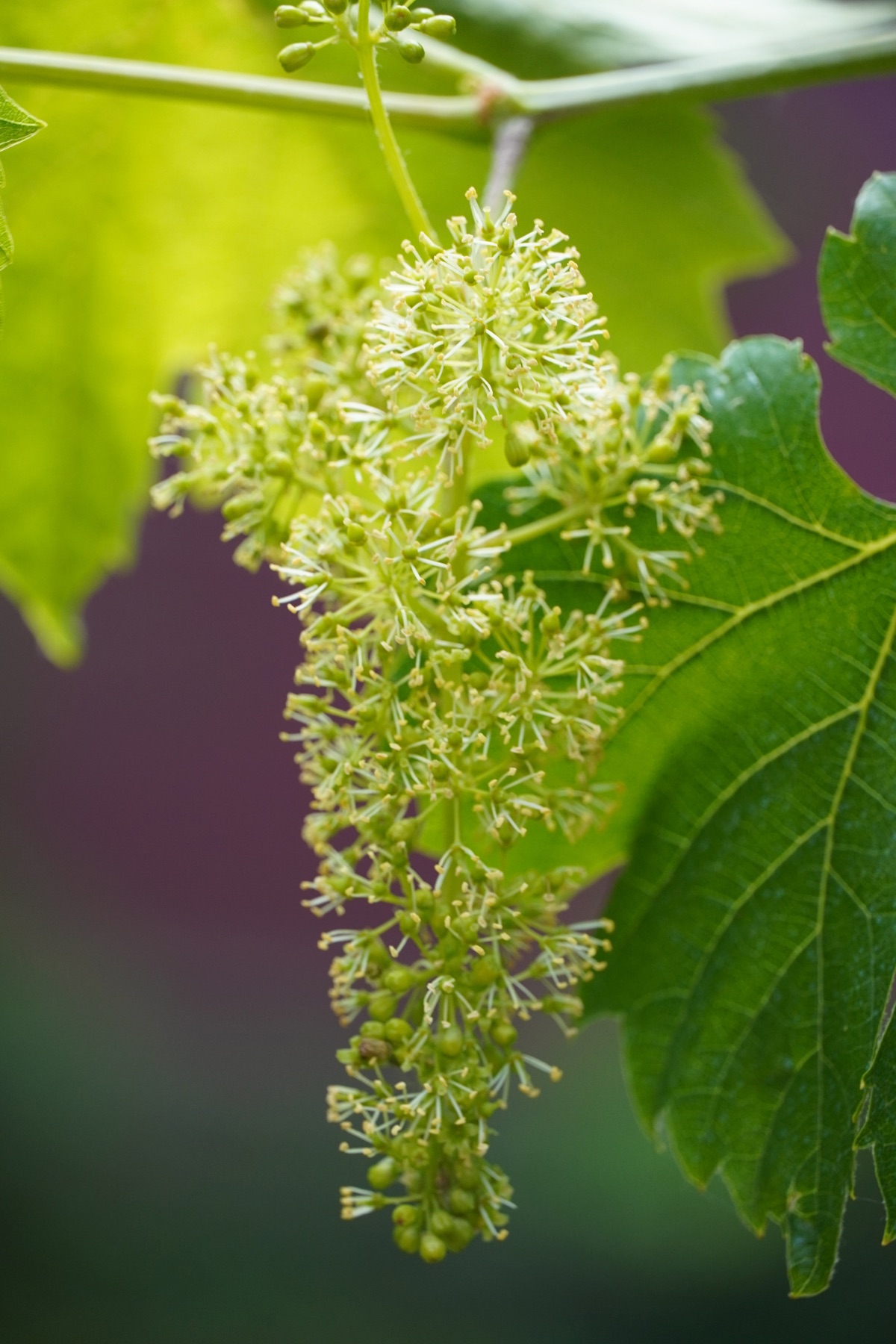
late spring
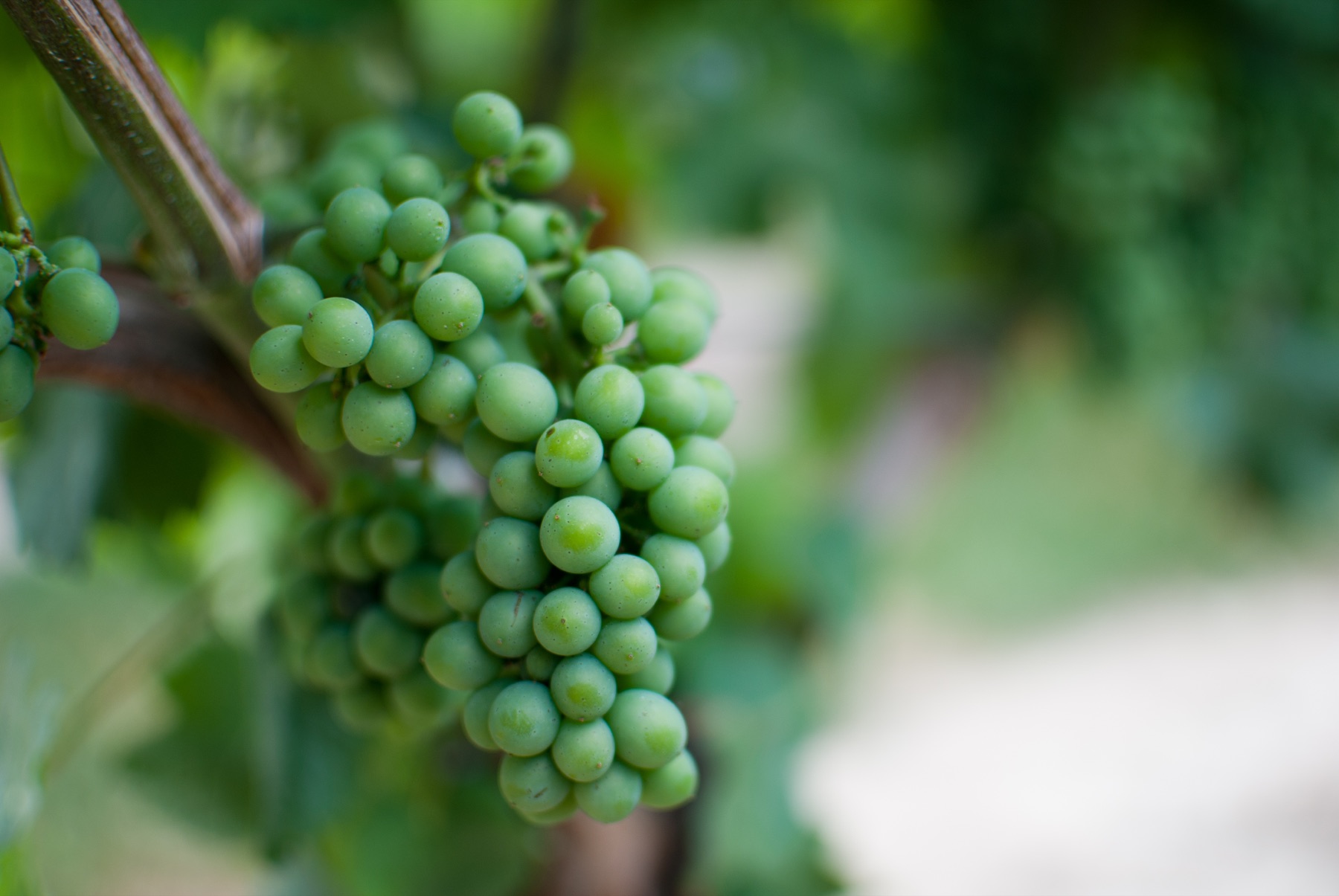
early summer
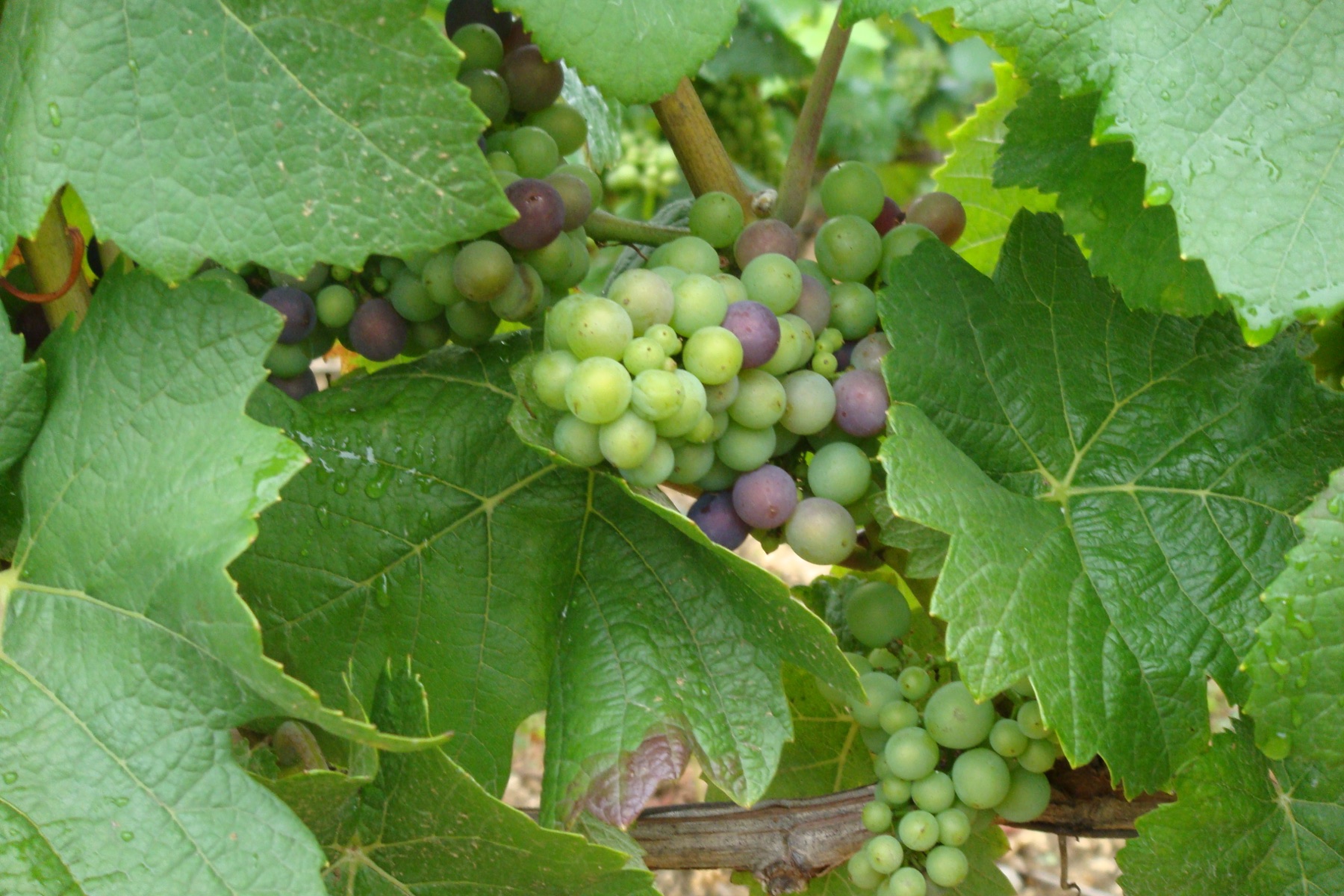
mid to late summer
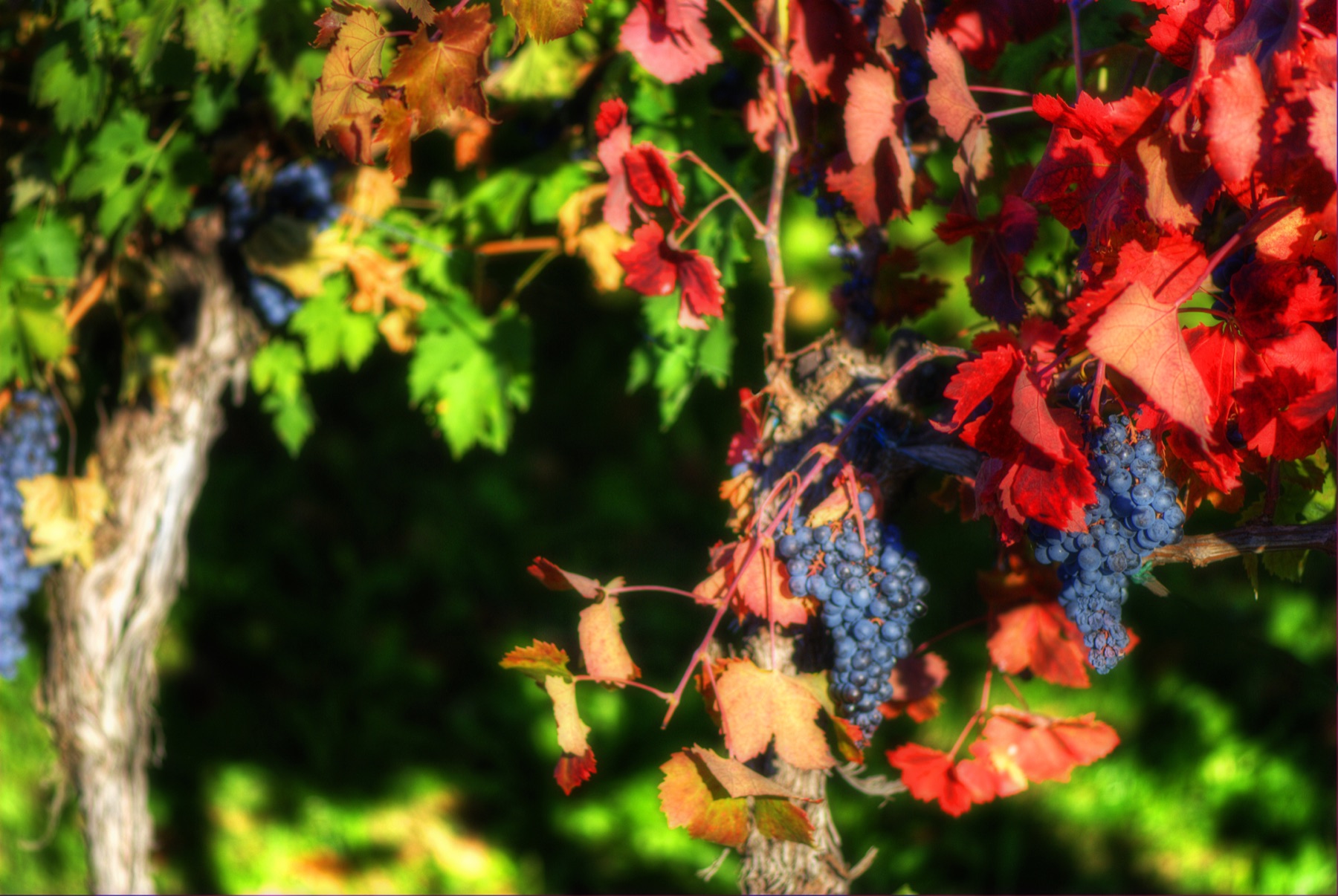
late summer to autumn
the broad useful band for vine photosynthesis; severe heat or water stress can close stomata and stop it
a useful berry-temperature range for anthocyanin formation; excess heat can slow colour development
a rough fall in air temperature with elevation before slope, inversion, wind and local geography modify it
latent buds form the future inflorescences during the current season, so shade today can lower next year’s crop
Book trail · Wined4 / Wine Production, anatomy, propagation, growth-cycle and grape-development chapters. The timing shifts with hemisphere, climate, variety and vintage; the sequence does not.
Terroir without magic
Terroir is useful when it is treated as a set of causes rather than a promise of flavour. Latitude, elevation and aspect alter heat and light; soil structure changes drainage, rooting and water supply; wind and humidity change disease pressure. The vine responds to those conditions, not to the romance of a rock name.
Heat controls the speed of photosynthesis, respiration and ripening. Too little and tannins or flavours stay green; too much and sugar runs ahead while acid disappears.
Leaves need light, while grapes can sunburn. Canopy position changes berry temperature and the development of colour, aroma precursors and methoxypyrazines.
A vine needs water to move nutrients and keep stomata open. Moderate deficit can restrict berry size and shoot growth; severe stress shuts photosynthesis down.
Texture, depth, drainage, water-holding capacity and rooting space matter more directly than a rock’s romantic name. Geology shapes the root environment; minerals do not travel into wine as a flavour seasoning.
Incline changes drainage, erosion and mechanisation. Aspect alters sunlight and wind, while cold air can pool on a valley floor and turn one spring night into a frost map.
Pruning fixes the starting bud count. Shoot positioning, trimming, leaf removal and crop thinning then balance leaves, shade, disease pressure and the amount of fruit each vine must ripen.
During ripening
A laboratory sugar reading can estimate potential alcohol, but it cannot tell us whether seeds taste ripe, skins have lost harshness or varietal aroma has reached the desired point. “Ripeness” is several clocks running at once.
The vineyard is designed before it is managed
Many of the most consequential vineyard decisions are made before the first crop: where rows run, which variety and rootstock are planted, how the vine is trained and how much machinery the slope will allow. Annual work then adjusts that permanent design rather than starting from zero.
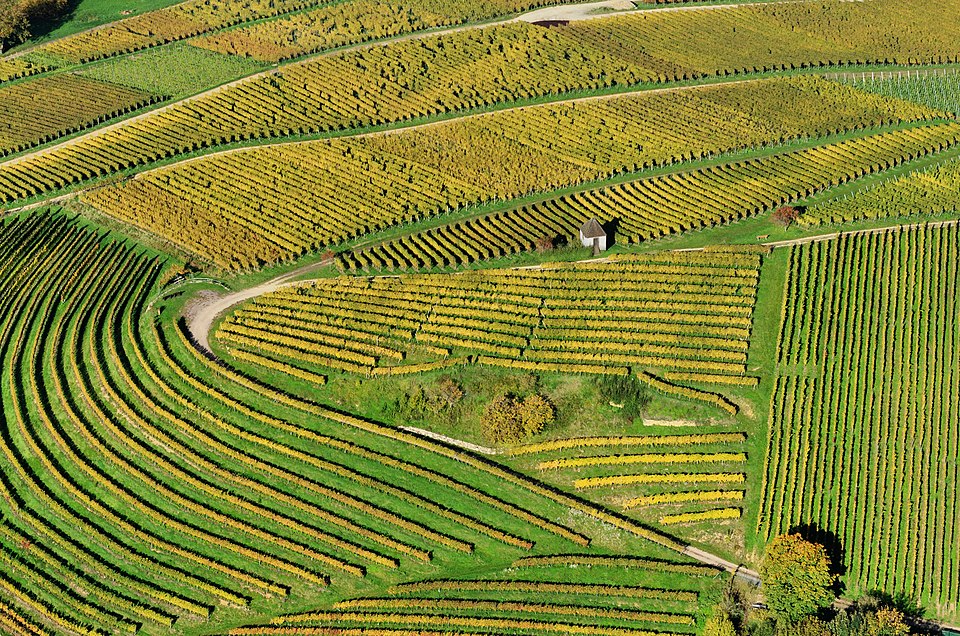
Slope, frost drainage, water, access, labour, machinery and appellation rules belong in the same decision as climate and soil. A beautiful steep plot may cost far more to farm; a flat warm one can make healthy fruit cheaply and consistently.
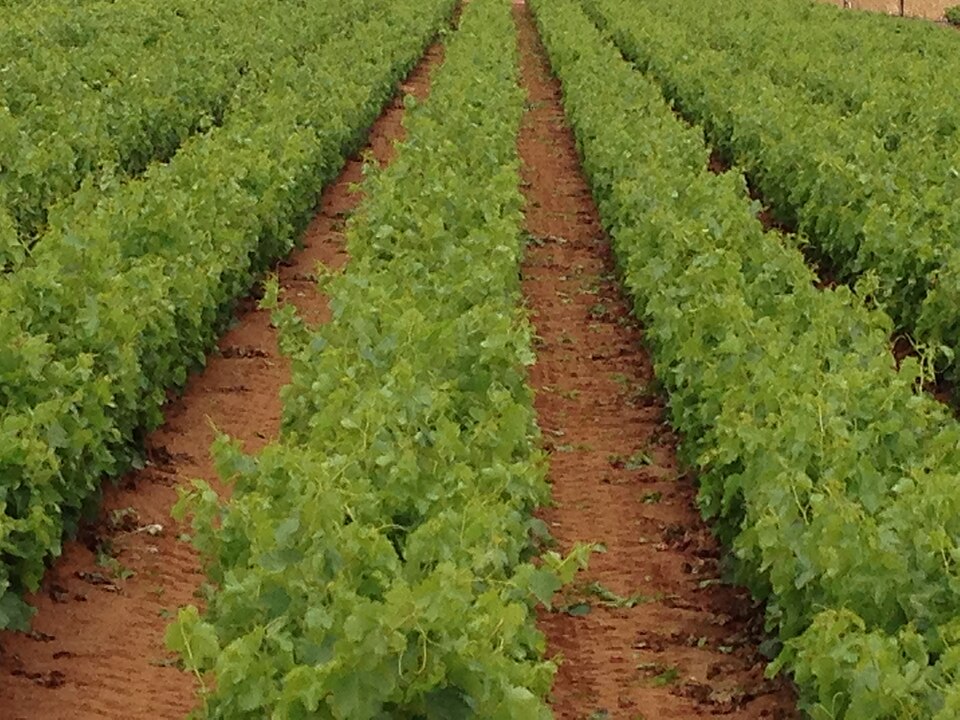
The variety sets the broad ripening window. A clone narrows berry size, yield or aroma within it. Mass selection takes cuttings from many good vines, preserving more diversity but also demanding careful disease screening.
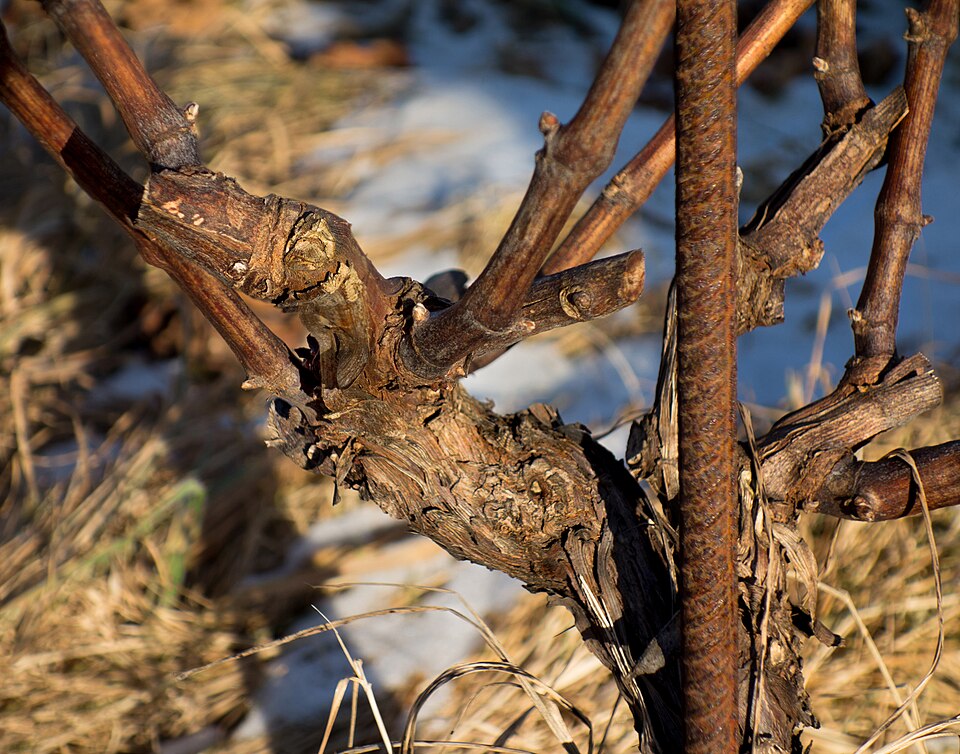
Most vinifera is grafted for phylloxera protection. Rootstocks also alter vigour, rooting depth and tolerance of drought, lime, salinity, waterlogging or nematodes, so there is no universally superior one.
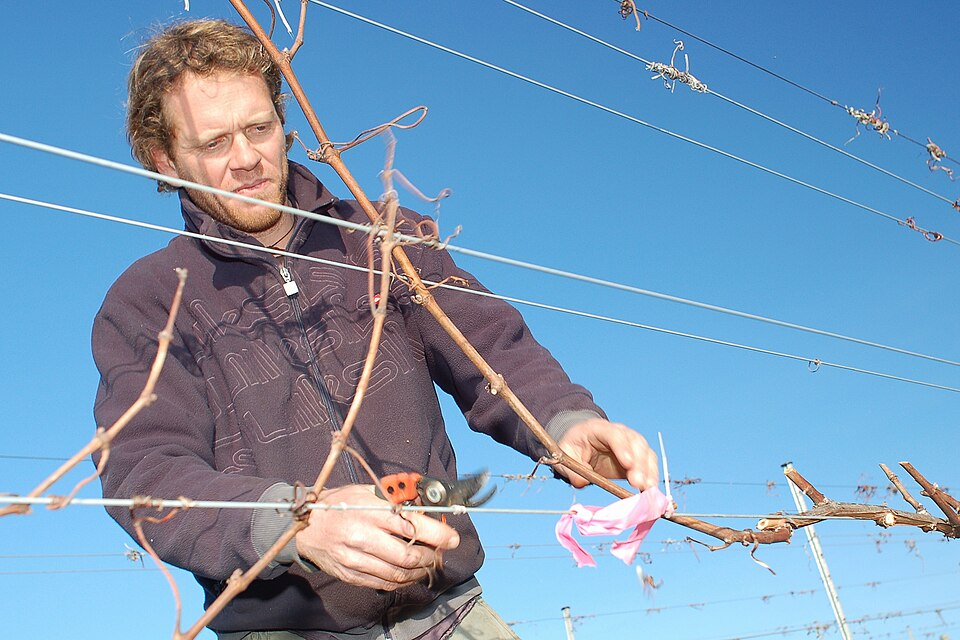
Head or cordon training describes old wood; spur or replacement-cane pruning describes the fruitful one-year wood retained each winter. VSP suits moderate vigour, while divided canopies spread a larger vine into more light.
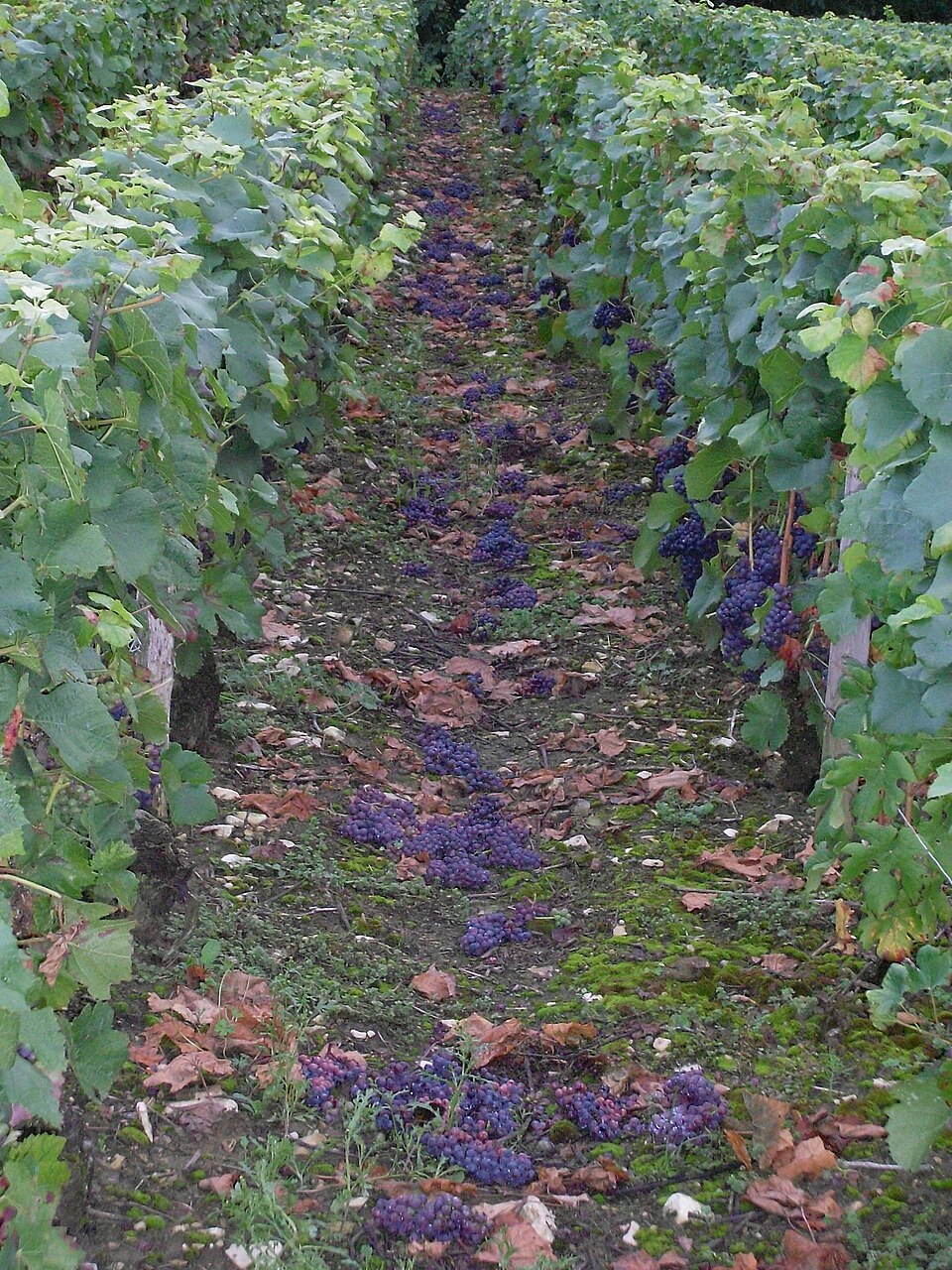
Too much fruit can delay ripening and drain stored carbohydrates. Too little can let shoots keep growing, making a dense shady canopy. The useful yield is the largest crop that this vine, site and wine style can ripen properly.
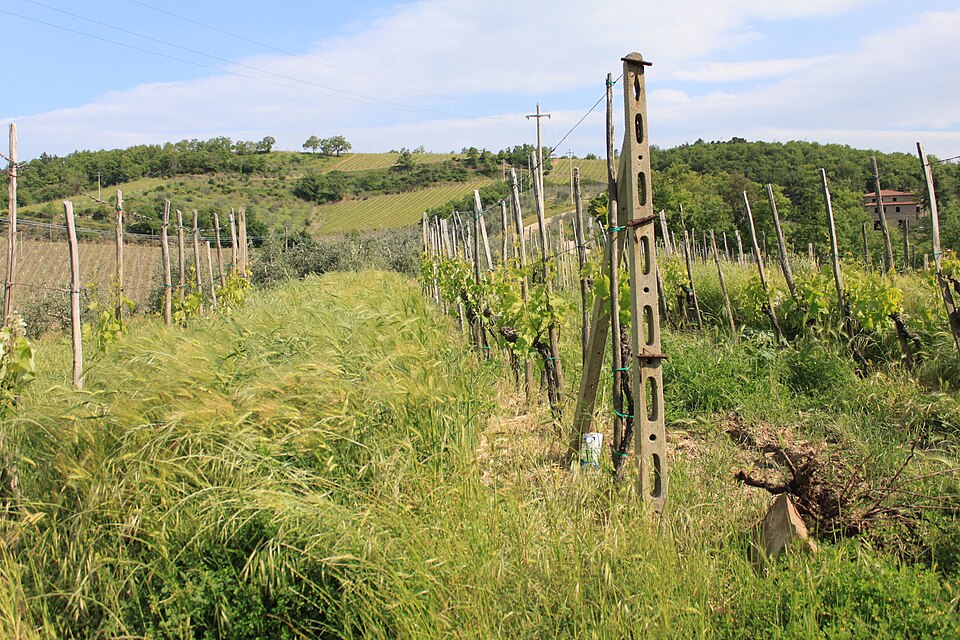
Structure, oxygen, drainage, water holding, humus and microbial activity decide how roots function. Compost and cover crops work slowly; mineral fertilisers act more directly. Excess nitrogen can be as troublesome as deficiency.
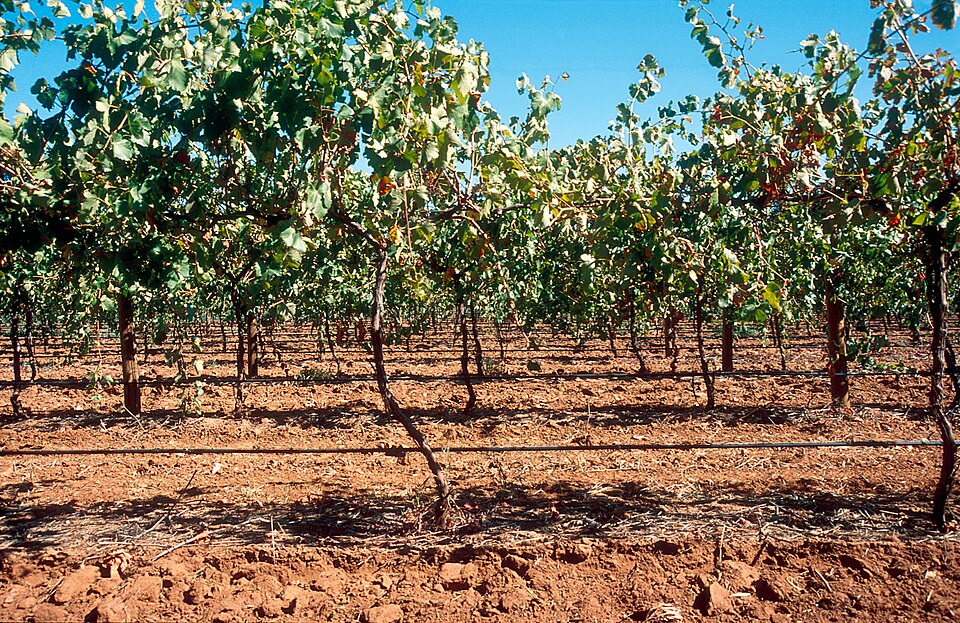
Drip irrigation is precise and can carry nutrients. Mild deficit between fruit set and véraison can slow shoot growth; severe stress closes stomata and stops photosynthesis. Dry farming can be a choice, a legal requirement or simply no available water.
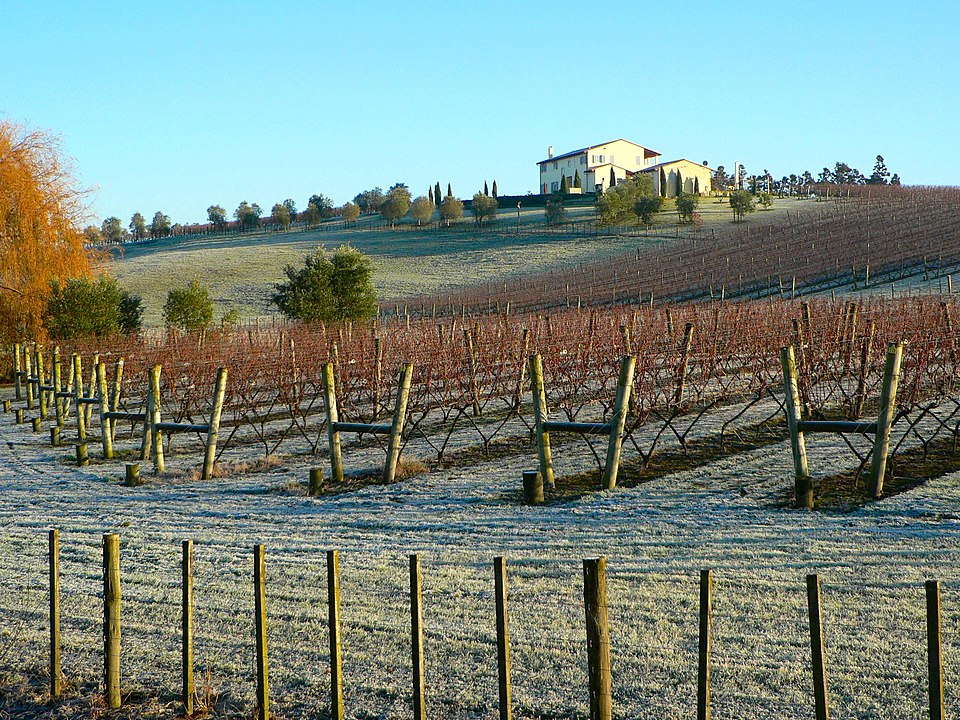
Orientation, shoot position and leaf removal alter light, berry temperature, wind and drying speed. More exposure can reduce green methoxypyrazines and improve colour, but hot afternoon sun can scar berries and flatten aroma.
Balance environmental, social and financial survival rather than follow one prohibited-input list.
Integrated pest management monitors pressure, protects useful predators and treats only when an action threshold is reached.Reject most synthetic fertilisers, herbicides and pesticides, then certify the permitted alternatives.
Cover crops, compost, sulfur and copper can be useful, but repeated tractor passes, soil compaction and copper accumulation remain real trade-offs.Add a whole-farm philosophy, preparations and a cosmological calendar to an organic baseline.
Some growers value the attention it forces onto the farm; controlled evidence separating its effect from careful organic farming remains limited.Map variation with GPS, imaging, soil sensors and yield monitors, then treat blocks or even vines differently.
It can reduce wasted water and sprays and sharpen picking decisions, but equipment, interpretation and clean data all cost money.I use soil and rock names to explain drainage, heat, rooting and water—not as a claim that slate, limestone or granite dissolves into a matching flavour. The vine builds aroma compounds through biology, and fermentation transforms them again.
The crop meets weather, pests and logistics
Farming wine grapes is less a search for perfect ripeness than a series of risk trades. Waiting may deepen flavour and soften tannin, but it also lengthens exposure to rain, rot, heat, birds and labour shortages. Harvest is the moment the grower decides which risks are still worth carrying.
The five harvest clocks
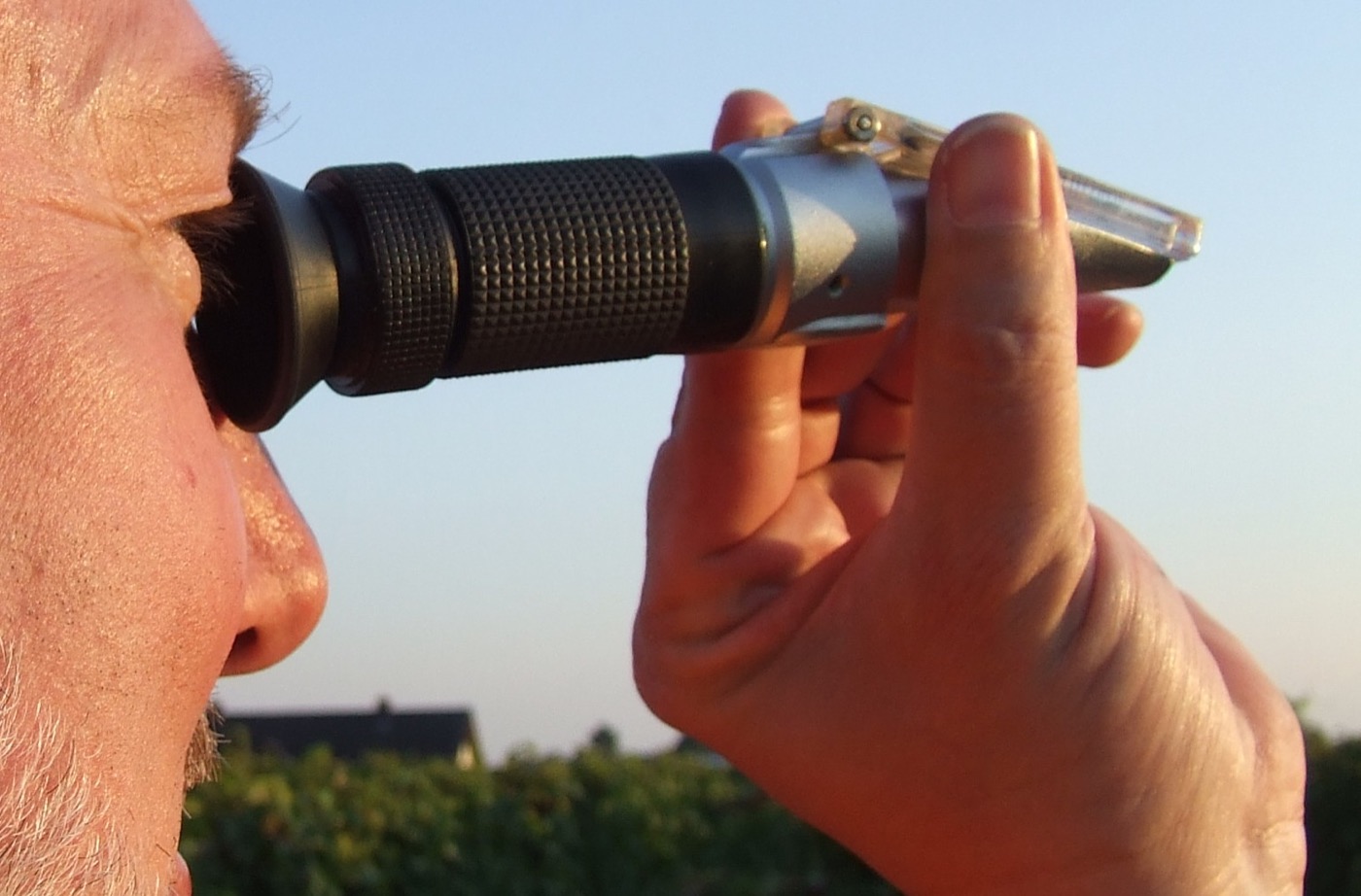
SugarrefractometerPotential alcohol, not flavour maturity; many dry table wines are picked around 19–25 °Brix.
Acidtitration + pHTotal acid, individual acids and pH move differently and control both taste and cellar stability.
Aromataste + analysisGreen, fresh, ripe and dried-fruit characters can change quickly near the end.
Phenolicsskins + seedsColour, extractability, bitterness and tannin maturity matter most when skins will ferment.
Weatherforecast + logisticsA perfect lab number is useless if rain, rot, labour or tank space prevents a clean pick.
Keeps whole bunches, works on steep or mixed plots and allows repeated passes for botrytis. It is slow, expensive and depends on skilled labour arriving exactly when the fruit is ready.
Can pick a large vineyard at night, lowering oxidation and refrigeration demand. Modern machines can sort well, but they shake berries from stems and cannot supply intact bunches for every wine style.
Book trail · Wined4 / Wine Production, vineyard establishment, soil and water management, canopy, hazards, pests, diseases and harvest chapters; regional examples checked against Wines of the World.
From country to climat
I have mapped 17 countries into 126 named regions and 344 closer zones. Start with the world, open a country, then choose a region. Burgundy goes another level down because its whole argument is that a few metres of slope can deserve a different name.
The country maps now draw the wine areas as boundaries rather than dots. Open European PDO, Australian GI and American AVA geometry supplies the regulatory footprints; elsewhere I use real county or provincial lines as an honest atlas redraw. Every map can be zoomed and dragged, while the Bordeaux and south Côte de Beaune views go down to finer INAO parcel geometry.
17 countries, 126 regions and 344 closer subregions.
Country outlines are from Natural Earth through D3 Maps Atlas. European country views use the CC0 European wine PDO inventory, grouped into the guide's readable regional chapters. Australia uses Wine Australia's GI boundaries, and the United States uses the UC Davis AVA project. For countries without a suitable open appellation layer, geoBoundaries province, county and municipality polygons provide the base for an atlas redraw. Those explain position and adjacency and are not presented as legal wine limits. River context, basic altitude lines, subregion summaries and the Burgundy overview were rebuilt from the regional chapters in Wines of the World, supported by the vineyard explanations in Understanding Wines. Bordeaux and the Meursault–Puligny–Chassagne close-up use the INAO's open AOC parcel-delimitation layer dated 27 July 2026. It is an informative rendering: the officially deposited plans remain legally authoritative. Bordeaux classification labels were checked against the CIVB's 1855 list and the INAO's 2022 Saint-Émilion classification. Château diamonds show a location only because there is no equivalent national open layer of each estate's changing, fragmented holdings. The optional close-up imagery comes from Esri World Imagery; the wine boundaries, rivers and altitude guides remain separate vector layers above it.
Genetics and names
Grape names travel, mutate and get translated. This atlas keeps synonyms, colour mutations, natural crossings and modern bred varieties from becoming one muddled family tree.
109 varieties and families
The atlas now opens from the world's most widely planted varieties downward. Search by grape, synonym, country, flavour or wine type, or switch to A–Z. Each entry tells me how the vine behaves as well as what the wine can taste like, because Cabernet in a textbook and Cabernet in a wet, shaded vineyard are not the same useful piece of information.
This is the book set's major and region-defining working collection, not a claim that the world contains only 109 grapes. More than a thousand named wine varieties exist, many in tiny local plantings. “Common” here means global bearing vineyard area, not bottle sales or cultural importance.
Area is a more stable comparison than bottle sales, although yield and final use still vary. The figures are mainly 2023 estimates; family labels are marked because they are not directly comparable with one variety.
Showing 109 of 109
The family is tangled
Pinot × Gouais BlancChardonnay · Gamay · Aligoté · Melon
Cabernet Franc’s lineMerlot · Carménère · Cabernet Sauvignon
Savagnin’s lineChenin Blanc · Grüner Veltliner · Silvaner relatives
Modern deliberate crossesZweigelt · Pinotage · Marselan · Bacchus
A synonym is the same grape under another name; a colour mutation is nearly the same genome with a skin change; a crossing combines two parents; and a family name such as Lambrusco or Malvasia may hide several genuinely different varieties. I have kept those categories separate wherever the books make the distinction.
A label can hide a genealogy
Wine labels compress botany into a few familiar words. Some words are alternate names for the same vine, some describe a selected clone, and others cover a family of genuinely different varieties. Keeping those relationships separate prevents regional custom from being mistaken for genetics.
Syrah and Shiraz are the same variety. So are Tempranillo, Tinta Roriz and Aragonez. The name can still signal a regional or stylistic convention.
Pinot Noir, Pinot Gris and Pinot Blanc are colour forms inside the Pinot family, not three unrelated vines.
Cabernet Sauvignon arose from Cabernet Franc and Sauvignon Blanc. A crossing can happen naturally or be made deliberately by a breeder.
A grower propagates one vine with useful berry size, yield, aroma or disease behaviour. It stays the same variety but not an identical farming tool.
Old vineyards may contain several varieties interplanted and harvested together. “Mixed” can therefore describe the ground before it describes the tank.
Lambrusco, Malvasia, Trebbiano and Muscat can refer to families containing genuinely distinct grapes. A family name is not always a synonym.
Microbes, extraction and maturation
Winemaking is controlled decomposition: give microbes the conditions to transform juice, decide what to extract, then prevent the useful reactions from becoming spoilage.
The vulnerable hours before fermentation
The first hours in the cellar decide what the ferment will inherit. Warm, broken fruit can oxidise or begin an uncontrolled fermentation before a tank is filled; cool, intact fruit gives the winemaker time to sort, separate press fractions and choose how much stem, skin and oxygen belong in the wine.
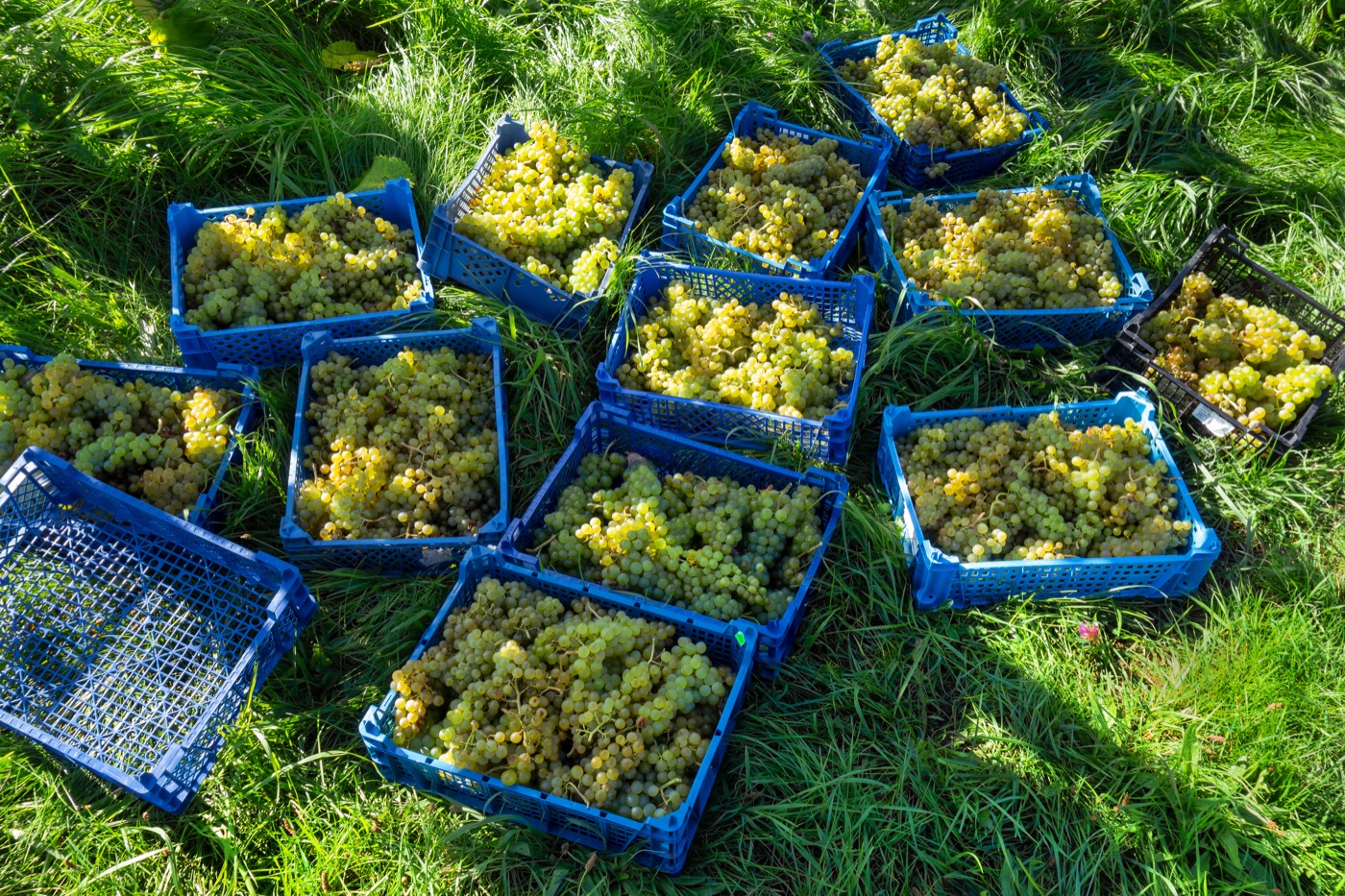
Small crates reduce crushing. Night picking, refrigeration, inert gas and carefully timed sulfur slow oxidation and unwanted microbes before the chosen ferment begins.
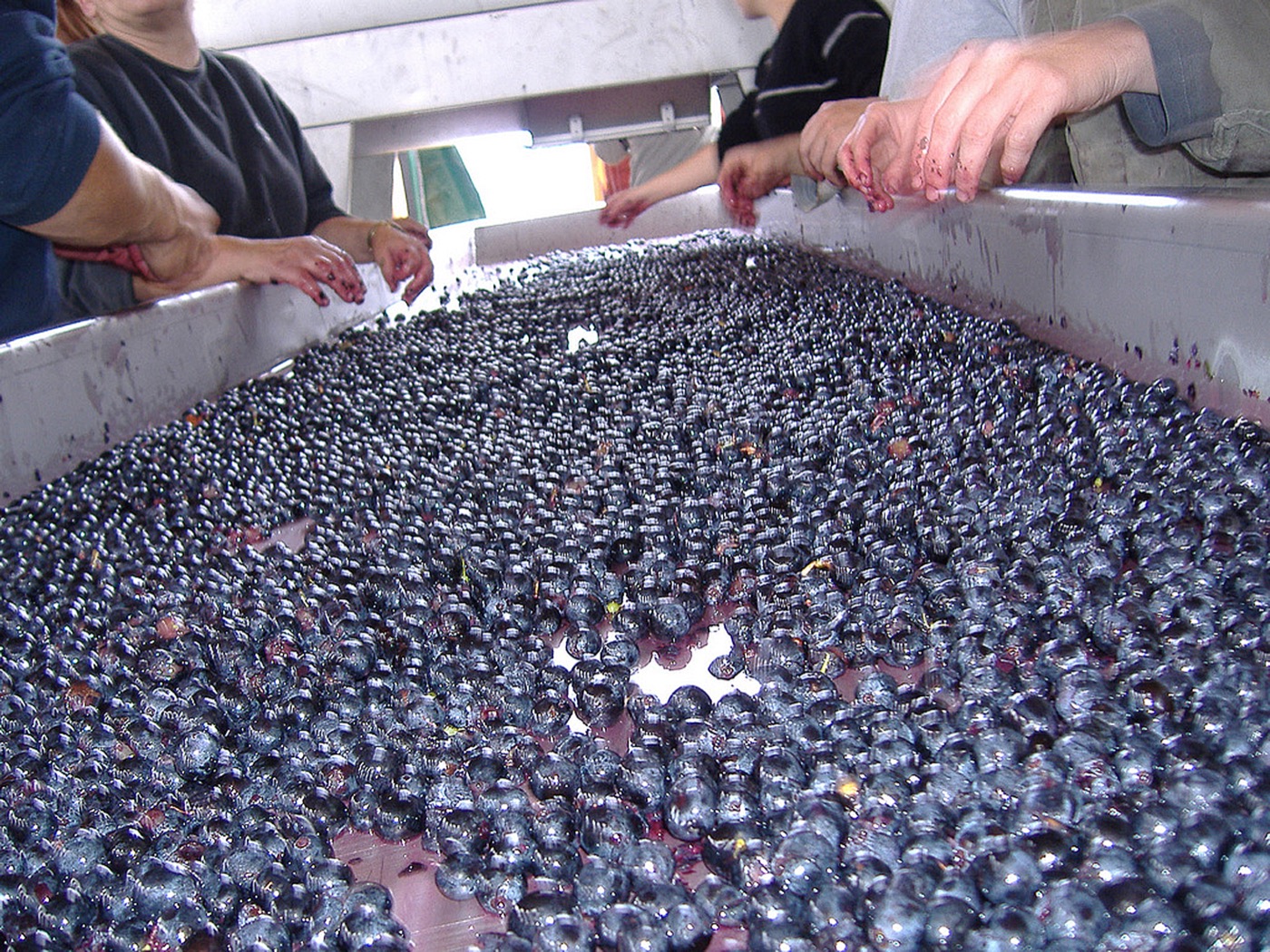
Remove leaves, insects, rot and badly unripe or shrivelled fruit. Hand sorting is flexible; optical sorting is fast and precise but expensive. Every rejected berry also reduces saleable volume.
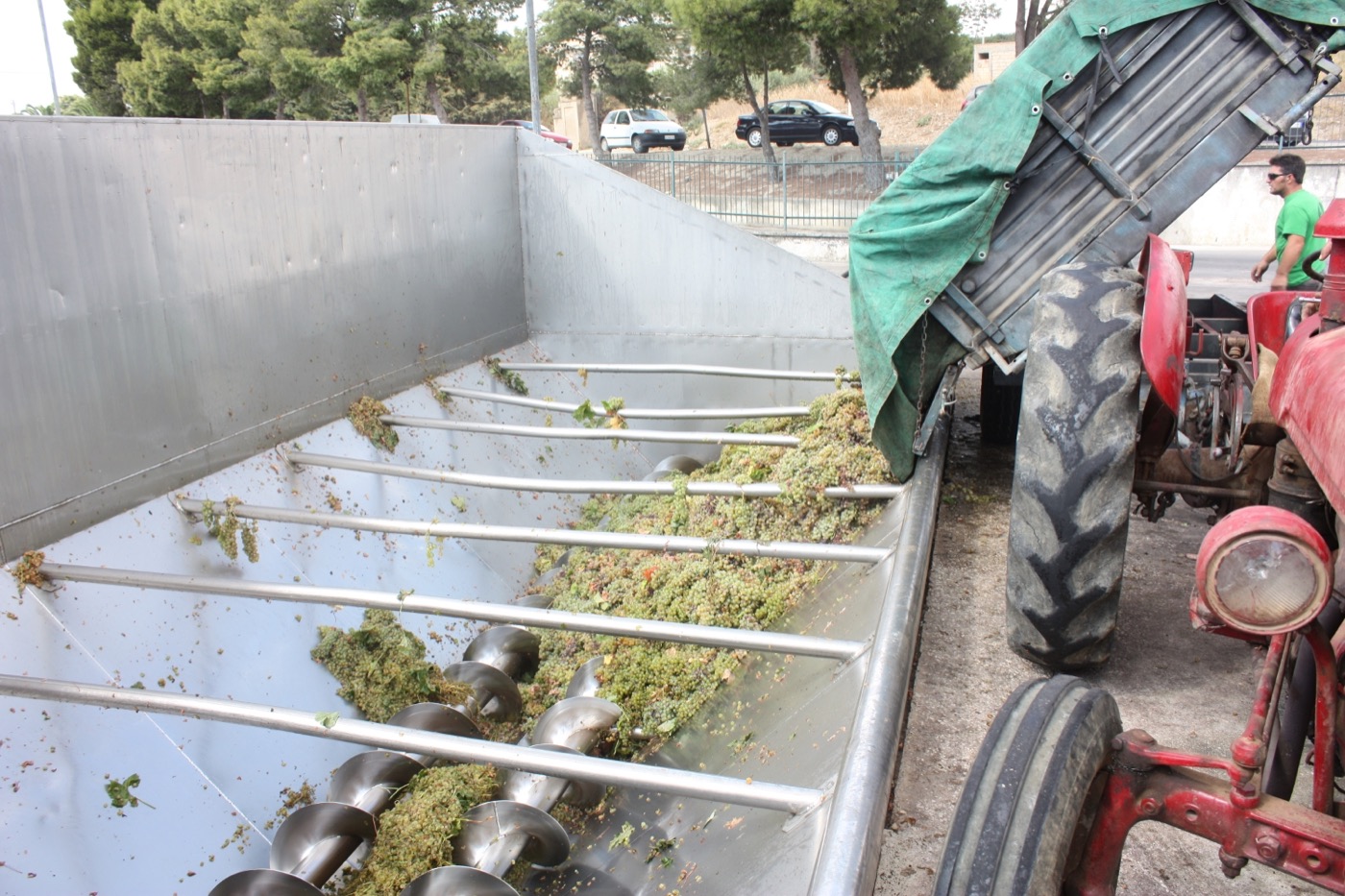
Stems add space, tannin and fresh herbal or floral character when ripe. Whole bunches enable carbonic behaviour; destemming makes extraction and vessel filling more uniform.
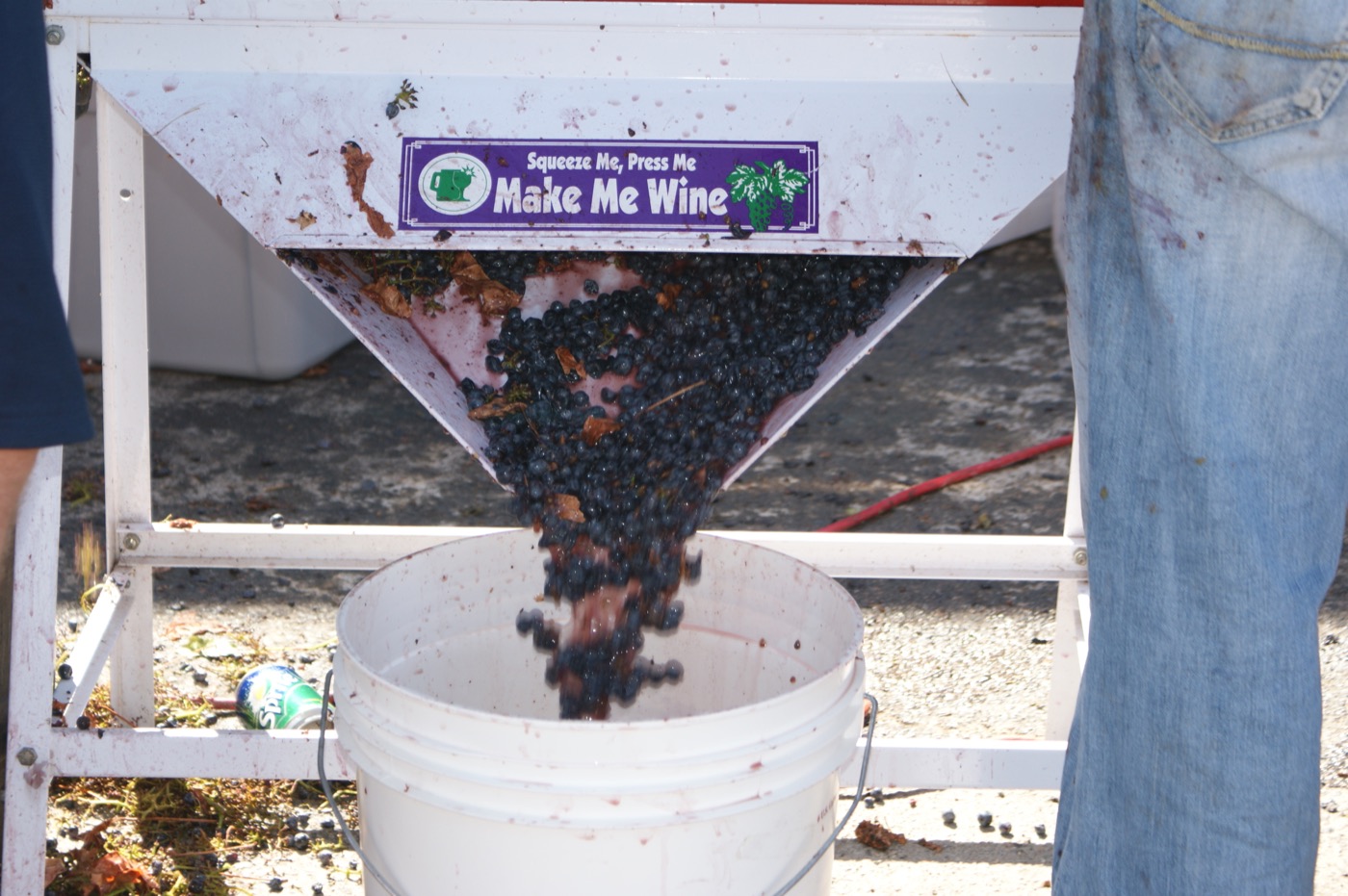
Breaking skins releases juice without deliberately breaking seeds. Crusher settings decide how many berries remain whole and how quickly skin extraction or ambient fermentation can start.
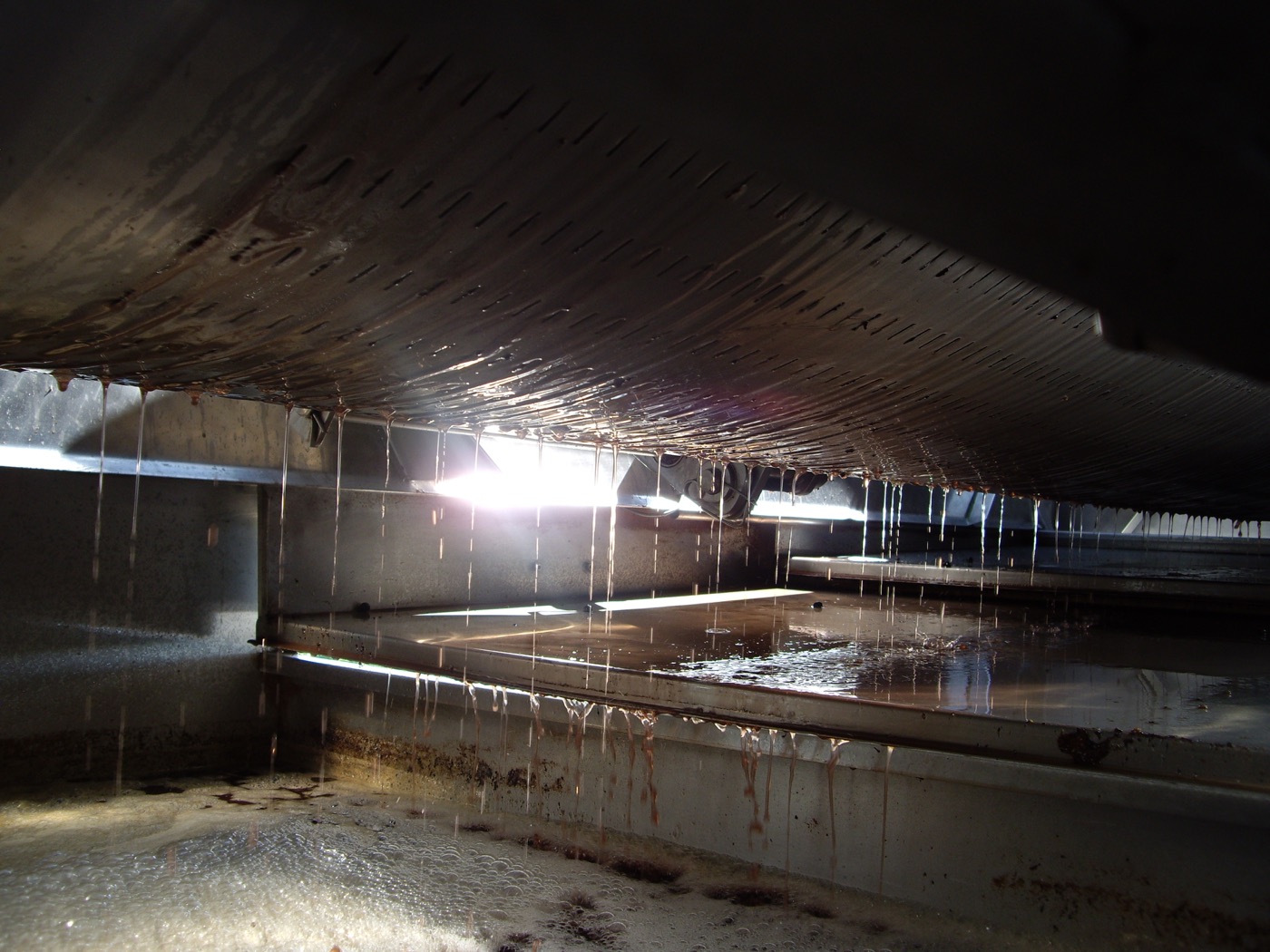
Free-run or low-pressure juice is gentler. Harder pressings add yield, solids, potassium and phenolics, so fractions are kept apart and blended only if they improve the wine.
Sugar, acid, pH, nitrogen and fruit condition decide whether the must needs enrichment, acidification, deacidification, nutrients or simply restraint. Law determines which options exist.
An inflatable membrane applies programmable pressure. It is gentle, can separate fractions and may be flushed with inert gas.
Pressure comes from above and juice drains through the basket. It is slow and exposed to air, but many producers value its gentle cake and tactile control.
Fruit can enter continuously, making it quick and economical. Stronger mechanical action usually means more solids and phenolics, so it suits inexpensive streams.
Needed briefly for yeast growth and useful in some red-colour and tannin reactions; dangerous when it browns delicate must or feeds acetic bacteria. Headspace, transfers and porous vessels matter more than slogans.
Suppresses microbes and interrupts oxidation chains. Only free molecular SO₂ is strongly active, and lower pH makes it more effective. Too little risks spoilage; too much mutes aroma and tastes hard.
Cooling slows oxidation, microbes and fermentation; warmth speeds extraction and yeast. A ferment can make enough heat to stop itself, so tank jackets and probes are quality tools, not decoration.
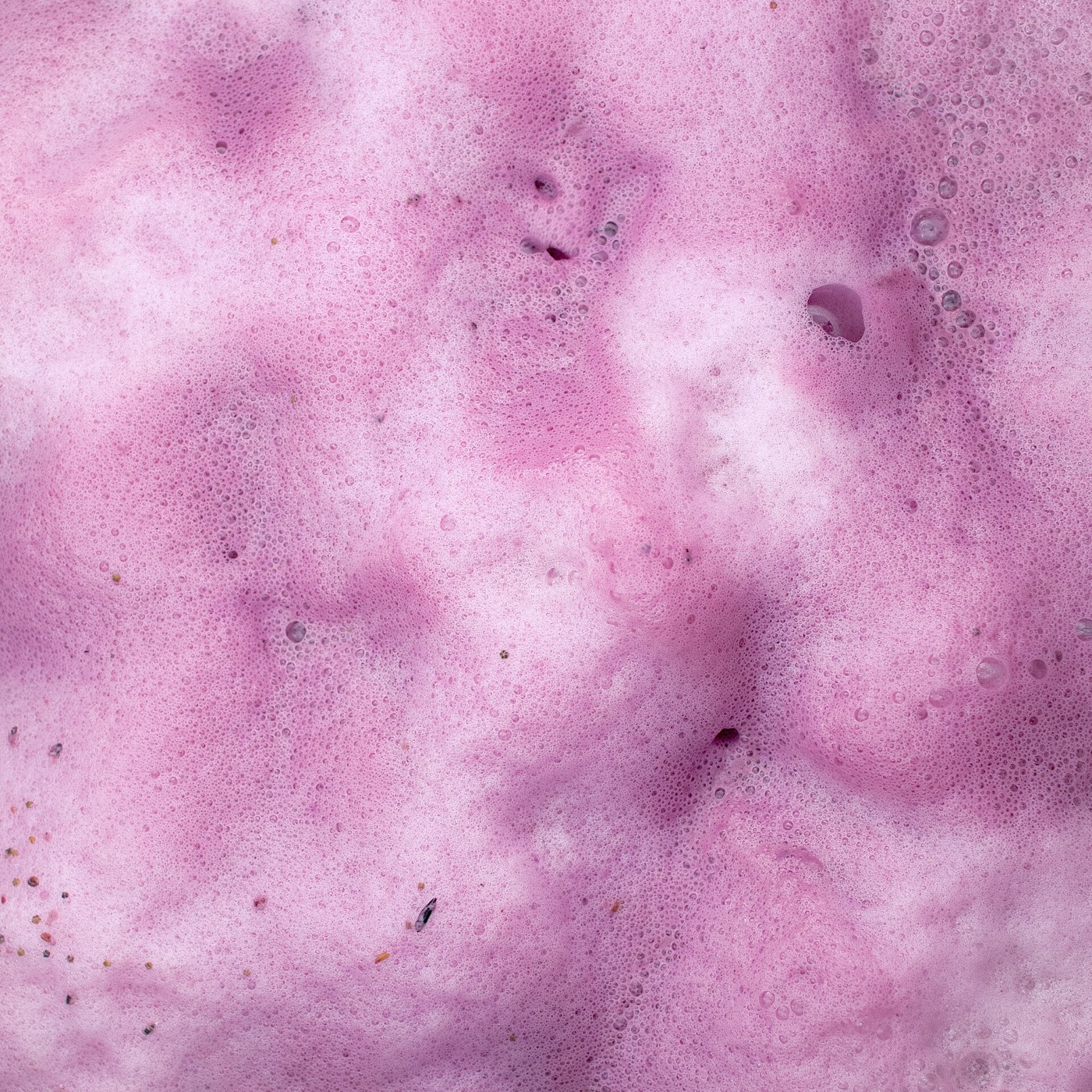
Yeast needs available nitrogen, vitamins and an early dose of oxygen. Starved cells can produce hydrogen sulfide or stop with sugar remaining, leaving a fragile wine open to spoilage.
Tartaric acid is usually added in warm regions; carbonate can reduce excess acidity in cool fruit. Because pH controls colour, SO₂ and microbes, the same tasting adjustment can have a much larger technical effect.
Cleaning removes dirt, sanitation lowers organisms and sterilisation targets critical equipment. Hoses, valves, filler heads and porous barrels are common hiding places; good wine cannot be inspected clean later.
Rules depend on jurisdiction and certifier. Organic wine may still use selected yeasts, nutrients, fining agents, processing aids and sulfur dioxide where the applicable standard permits them.
Certified biodynamic wine starts with certified biodynamic fruit and follows its certifier’s cellar standard; permitted yeasts, additions and processes vary by scheme and country.
There is no single universal legal category. The term usually signals few additions or manipulations, but farming, yeast, filtration and sulfur practices should be stated rather than inferred from the word.
Book trail · Wined4 / Wine Production, transport, grape reception, sorting, crushing, pressing, must adjustment, oxygen, sulfur dioxide and hygiene chapters.
The central reaction
Fermentation is a living process rather than a formula executed once. Yeast changes its behaviour as sugar falls, alcohol rises and nutrients run short; the heat it produces can alter both aroma and extraction. The cellar’s task is to guide that ecology without pretending it can be made inert.
An ambient ferment begins with organisms from fruit and cellar, although alcohol-tolerant Saccharomyces often dominates later. A cultured strain improves predictability. Neither choice excuses poor temperature, oxygen or nutrient management.
Cool fermentation preserves volatile fruit and slows extraction. Warmer red fermentation—often around 26–32°C—extracts skins more rapidly but can drive aroma away or stress yeast if heat escapes control.
Lactic-acid bacteria convert sharper malic acid into softer lactic acid plus CO₂. The wine becomes less acidic and slightly higher in pH; diacetyl may add butter, especially when lees and sulfur timing allow it to remain.
Methoxypyrazinesgreen pepper · leaf · especially Sauvignon and Cabernet family
Thiolsgrapefruit · passion fruit · blackcurrant; released from odourless precursors
Terpenesrose · citrus blossom · grape; abundant in Muscat and Gewürztraminer
Rotundoneblack pepper · especially Syrah, Grüner Veltliner and some local reds
Estersfresh fruit aromas made and rearranged during fermentation and ageing
Volatile sulfurfrom useful struck-match complexity to rotten egg and cabbage, depending on molecule and dose
Four routes through the same fruit
Colour categories are also contact decisions. Press a pale grape quickly and fermentation begins as juice; leave juice with skins and the wine gathers pigment, tannin, aroma precursors and texture. The familiar families below are not four unrelated recipes, but different answers to when solids and liquid should meet.
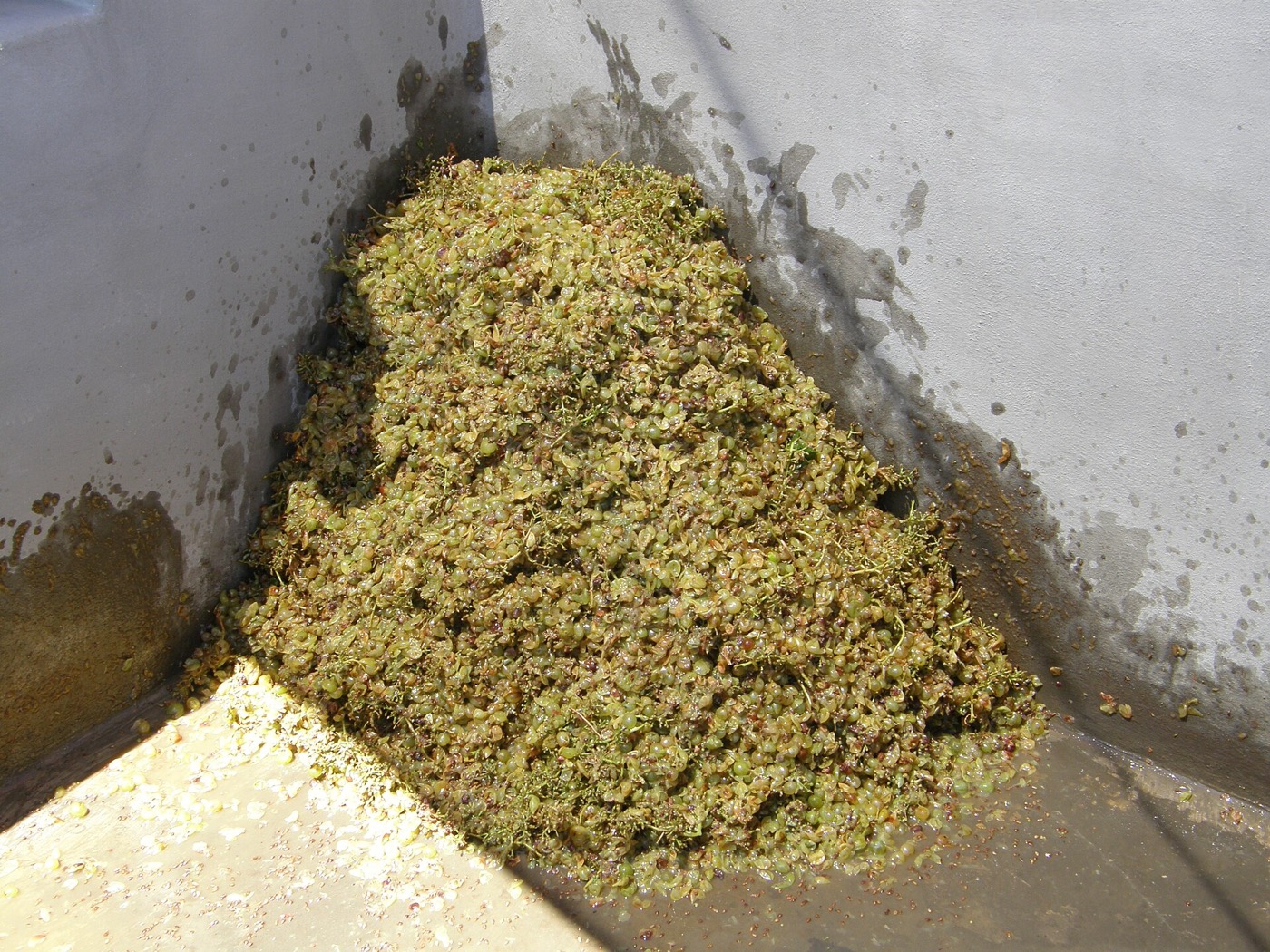
Removing skins early limits tannin and colour. Cool 12–16°C ferments often retain more fruit-driven ester aroma.
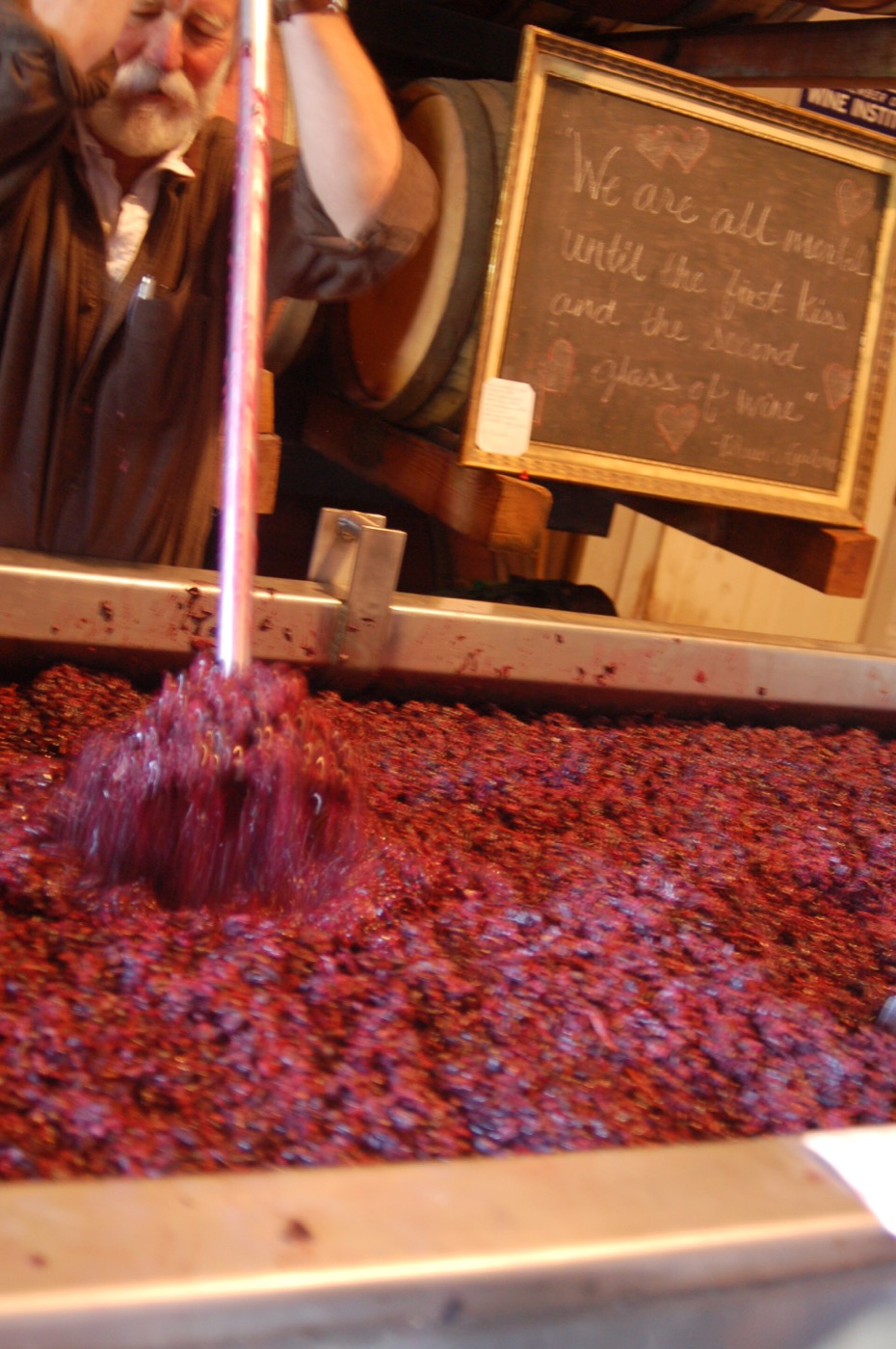
Alcohol, heat and cap movement extract anthocyanins, tannins and flavour. Time is not automatically quality: seeds and stems can also contribute harshness.
Pale colour can come from gentle direct pressing; deeper rosé uses more skin time. Saignée bleeds juice from a red ferment but changes that red wine too.
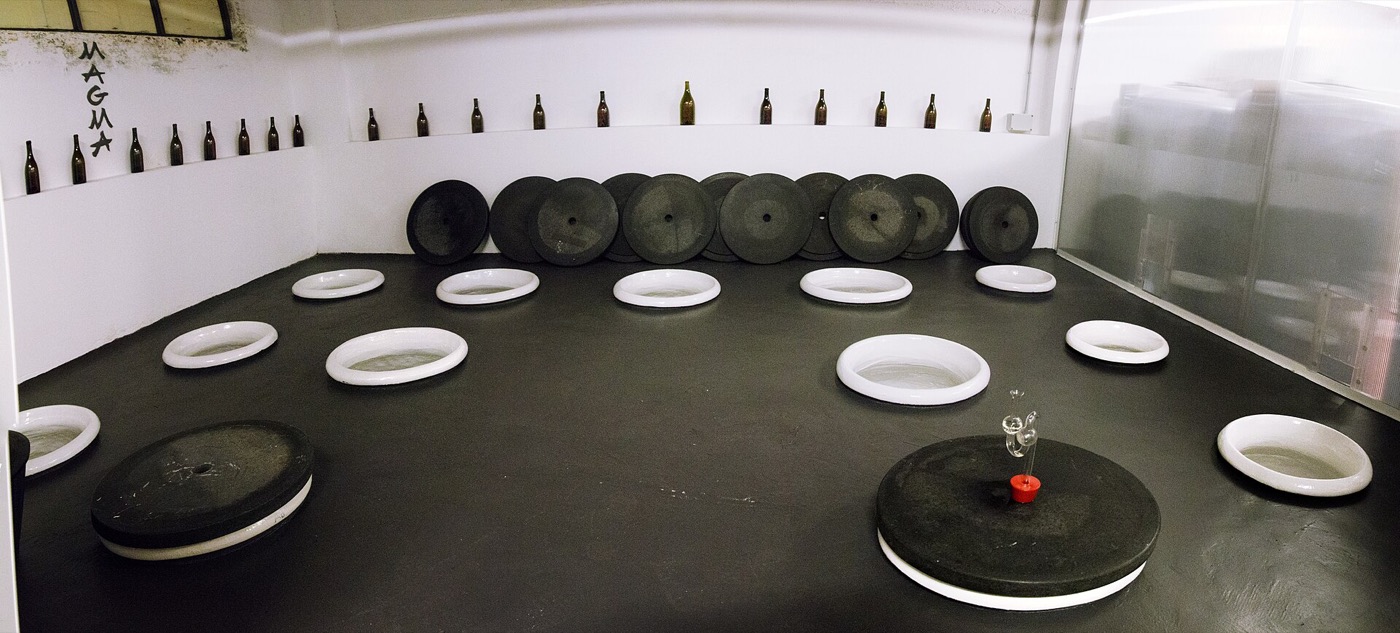
This is a production method, not orange flavouring. White skins add tannin, colour, tea-like aromas and a very different texture.
Pumping over, punching down, rack-and-return and submerged caps all move liquid through skins. Whole berries can also ferment internally, producing the bright esters associated with carbonic maceration.
What moves from solid fruit into liquid
Anthocyanins dissolve readily in watery must; tannin extraction rises as alcohol and heat build. Every method is therefore a choice about which compounds arrive, when they arrive and what else comes with them.
The quiet decisions after fermentation
Once the ferment stops, change becomes slower but no less deliberate. Lees can broaden texture, oxygen can either knit tannin or flatten fruit, and a vessel controls exchange as much as it lends a flavour. Blending is the final version of the same work: choosing which differences should remain visible and which should be brought into balance.
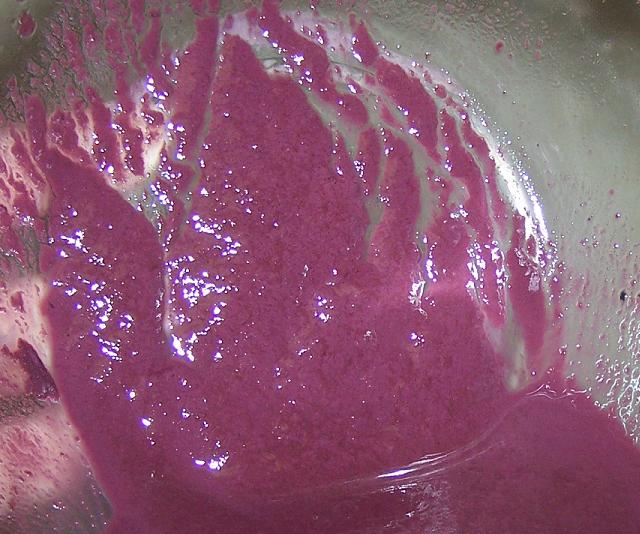
Dead yeast can release mannoproteins and other compounds that soften texture, bind aroma and improve foam. Stirring speeds contact but also introduces oxygen and labour.
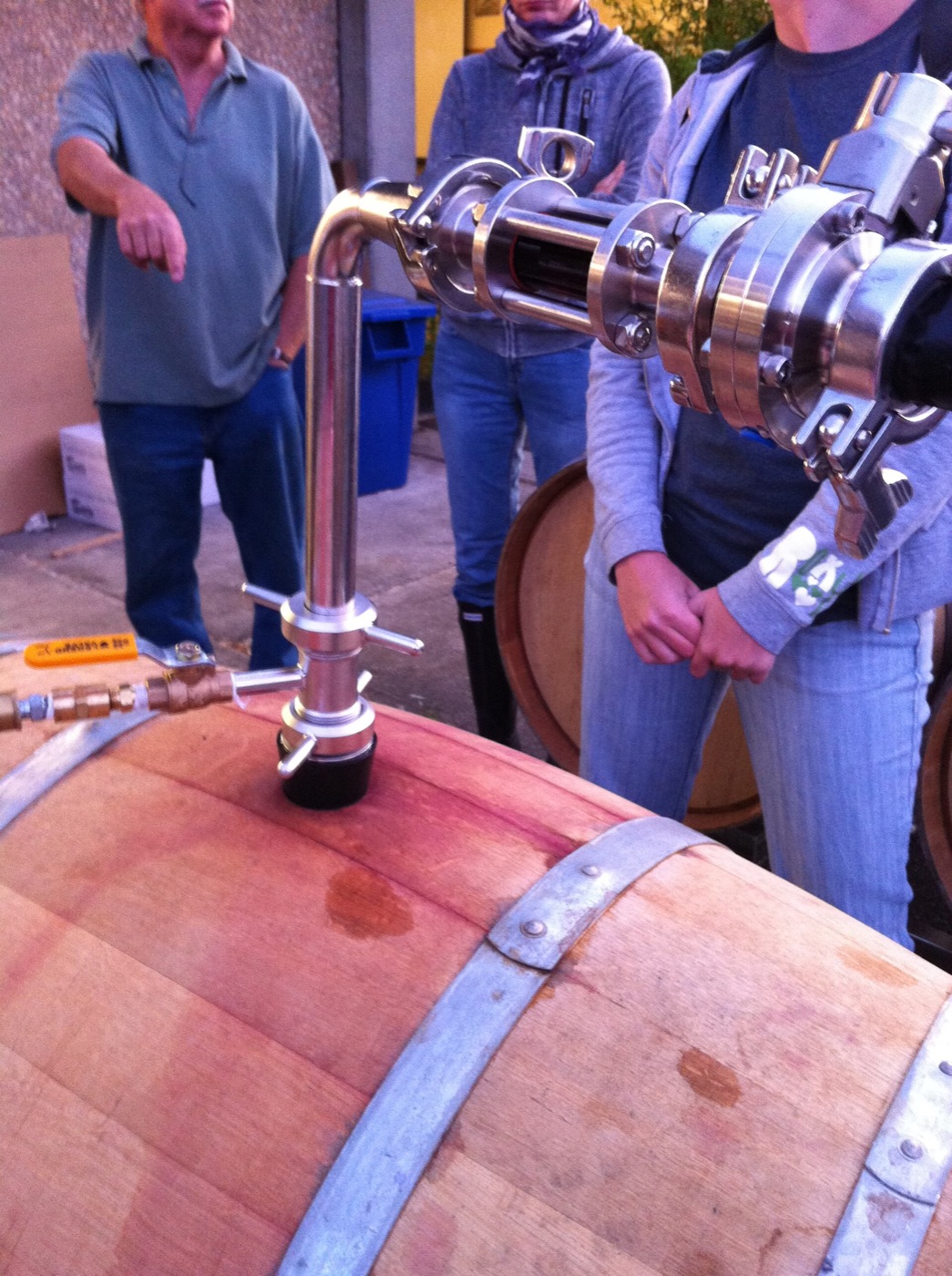
Too much browns and flattens fruit; controlled exposure polymerises tannins, develops nuts and dried fruit, and helps some reductive compounds dissipate.
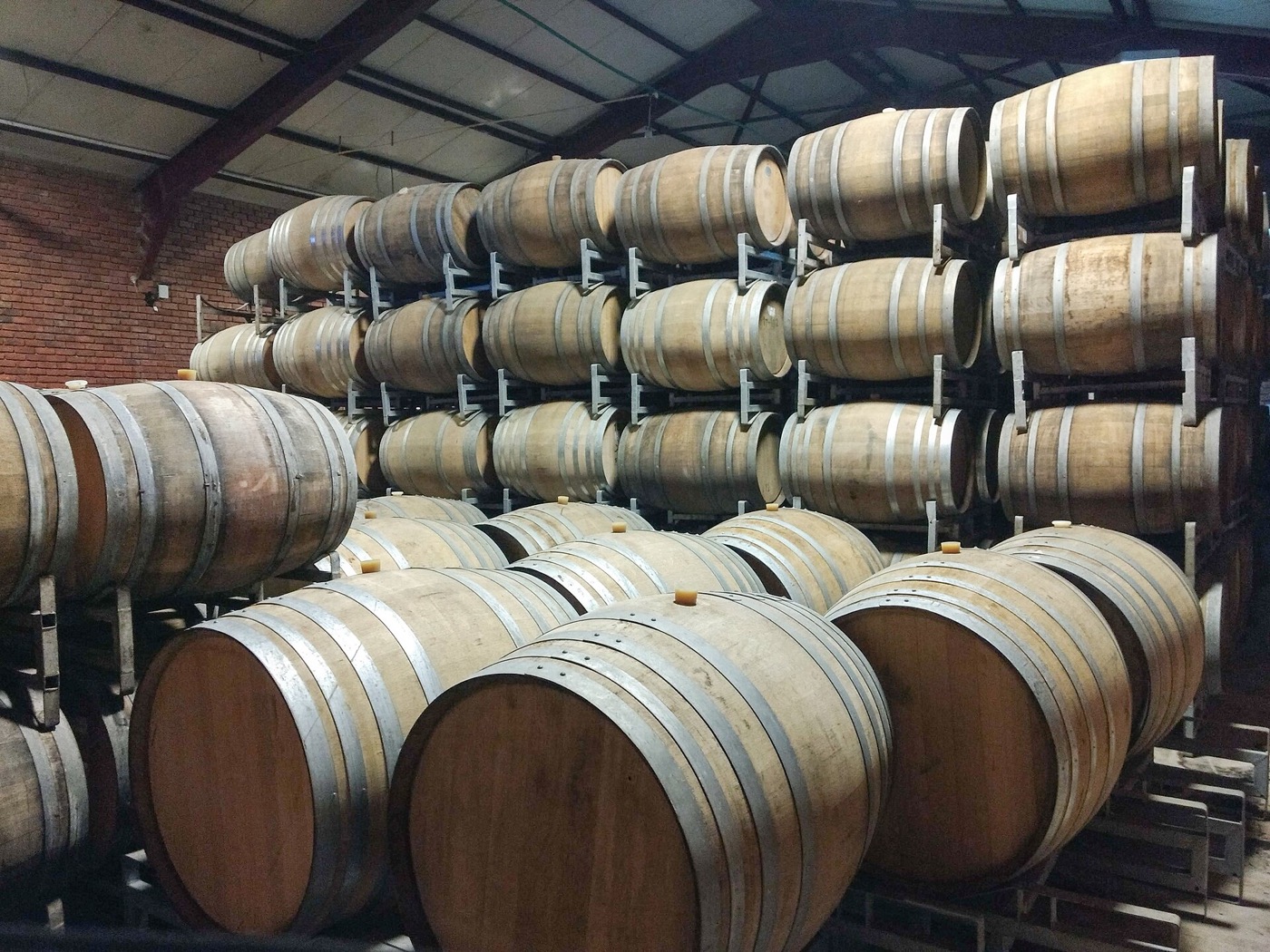
New, small barrels give the most flavour and oxygen per litre. American oak generally carries more coconut-like oak lactone and a stronger flavour impact; European oak is often subtler and can contribute more tannin. Grain tightness varies with tree growth and origin, so “European” does not itself mean “tight-grained.” Toast level changes smoke, spice and vanillin.
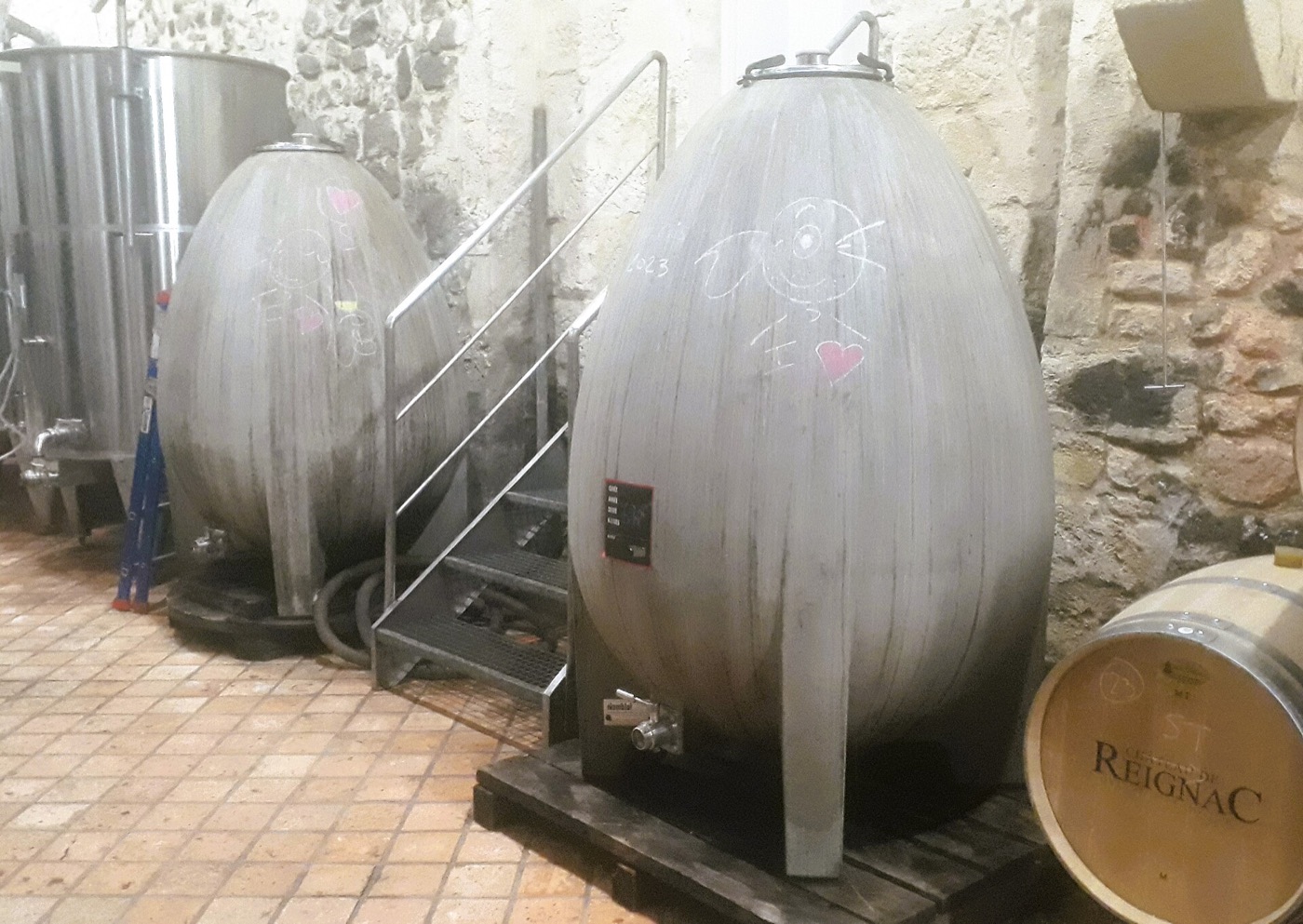
Concrete buffers temperature and can admit slow oxygen without adding wood aroma. Clay vessels range from porous to lined, so “amphora” alone does not tell me how oxidative the wine was.
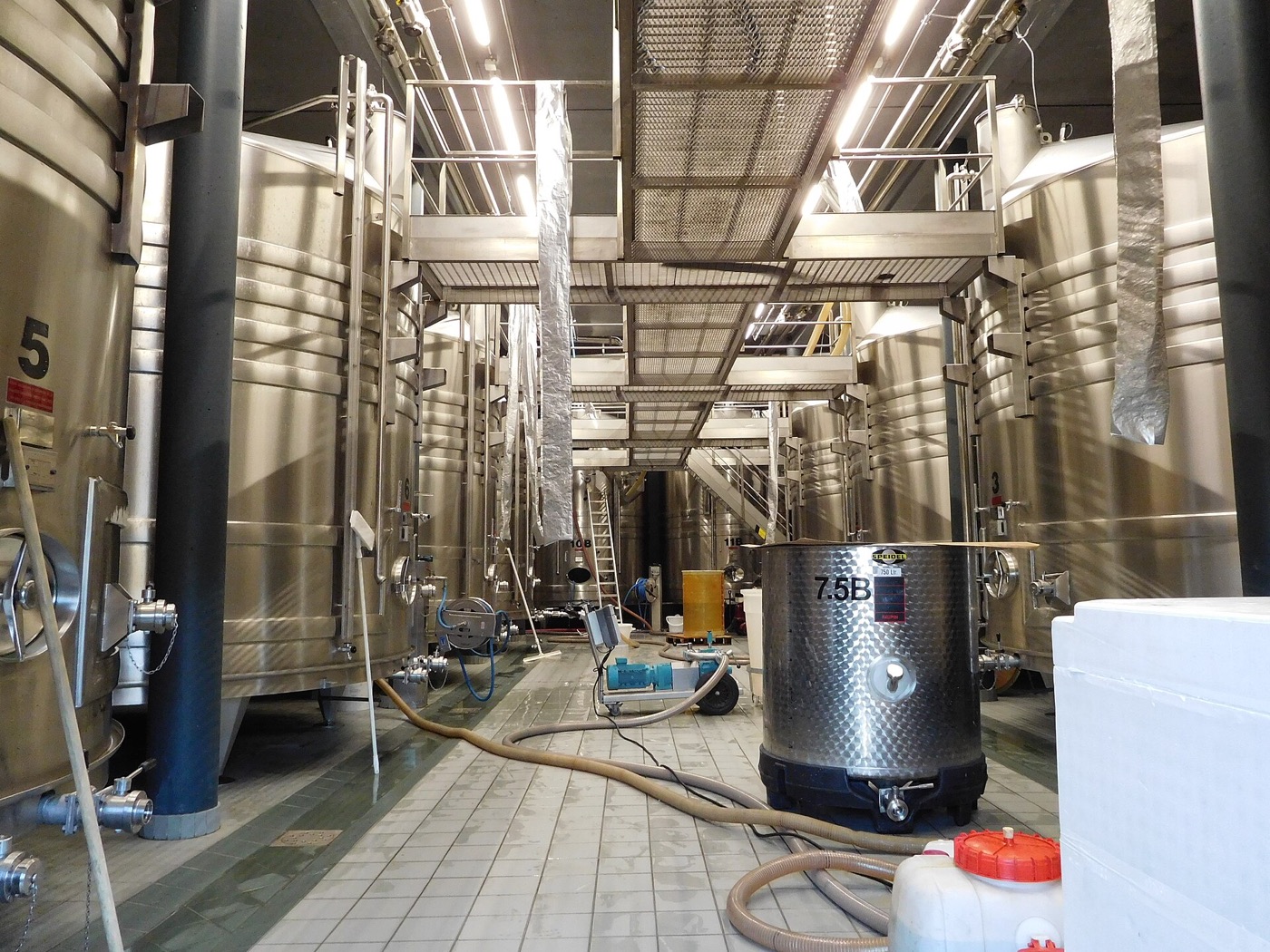
Inert, cleanable and easy to cool. It is ideal when the aim is fruit protection, but the headspace still has to be managed.
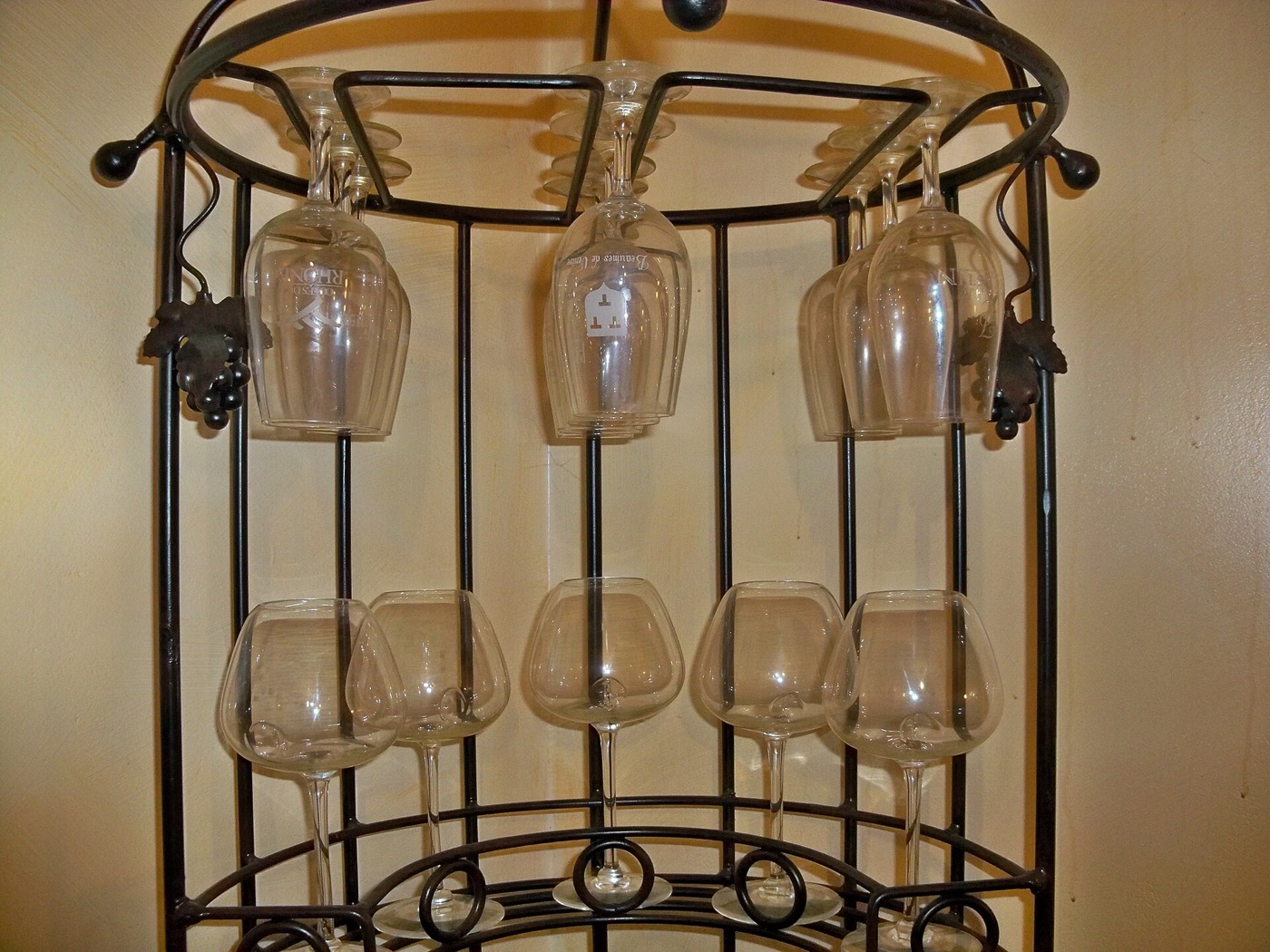
A blend can combine grapes, plots, vessels or years. It may build complexity, correct balance, preserve house style or create the exact volume and price a producer needs.
Book trail · Wined4 / Wine Production, fermentation, extraction, MLF, maturation and blending chapters; cross-checked against Understanding Wines.
Clear, stable and ready to travel
A wine is not finished simply because fermentation is over. It must survive temperature changes, transport, light, oxygen and time without throwing an avoidable haze or restarting in bottle. Fining, filtration and packaging are therefore trade-offs between stability, flavour, cost and intervention.
Gravity drops grape fragments, yeast and tartrates; clean wine is moved off the sediment.
Very gentle and cheap in equipment, but it occupies vessels and ties up wine for longer.An oppositely charged material binds microscopic colloids, haze-forming proteins, harsh tannin, browning or some odours.
Bench trials find the smallest useful dose. Too much can strip flavour, colour or texture.Depth media trap a dirty load; membranes make a final absolute barrier; cross-flow cleans itself while wine moves tangentially.
Filtration gives reliable clarity and microbial stability, but costs equipment and can be overused.Bentonite prevents protein haze; cold, seeding, electrodialysis or additives control tartrate crystals; filtration removes yeast and bacteria.
Tartrates are harmless. Stability is mainly preventing an ordinary natural change from surprising the drinker.Recheck alcohol, sugar, acid, free and total SO₂, dissolved oxygen, CO₂, filterability and sensory condition.
Blending comes before this stage because changing pH or composition can make a previously stable wine unstable again.Fill with low oxygen pickup, leave controlled headspace, close consistently, record the lot and keep samples.
The closure’s oxygen transmission must fit the intended shelf life; the most expensive closure is not automatically the best match.Fining is targeted chemistry
Bentoniteunstable proteinClay; common for white and rosé, but creates bulky lees and some wine loss.
Egg whitefirm red-wine tanninGentle protein fining; animal-derived and an allergen if residues exceed local limits.
Gelatine / isinglassbitterness or clarityVery effective animal proteins; easy to over-fine and unsuitable for vegan wine.
Casein / PVPPbrown phenolicsMilk protein or synthetic polymer; useful for oxidised white and rosé streams.
Plant proteintannin and clarityPea, potato and other options can replace animal proteins after bench trials.
Charcoalcolour or strong odourPowerful and blunt. Treating one fraction and blending it back can avoid erasing the whole wine.
Package and closure
Natural cork is renewable and elastic but varies in oxygen ingress and can carry TCA. Technical cork is cleaned and engineered for more consistent transmission.
A liner sets oxygen transmission. Very tight seals demand careful pre-bottling oxygen and sulfur management; a screwcap is not evidence of cheap wine.
Inert and impermeable but heavy and energy-intensive. Dark glass protects against light strike; lighter bottles usually matter more environmentally than decorative thickness.
A collapsing bag protects opened wine well; lined cans and cartons exclude light. Their barrier layers and taps set a shorter shelf life than glass.
A crystal at the bottom may be harmless tartrate, not glass. “Unfined and unfiltered” describes omitted processes, not automatic quality; the useful question is whether the wine remained clear, stable and expressive without them.
Book trail · Wined4 / Wine Production, finishing, filtration, stabilisation, packaging, closures, quality assurance and transport chapters.
A shelf organised by structure
Colour is only the first branch. Dryness, bubbles, alcohol, extraction, oxidation, flor, botrytis, drying and temperature create a much larger style map.
Not just red, white and pink
Colour alone is a poor filing system. A pale wine can be sweet, sparkling, tannic or oxidative; two reds can share a grape and differ completely in body and extraction. A more useful taxonomy begins with structure—acid, tannin, alcohol, sugar and texture—then asks how the cellar built it.
Muscadet · Vinho Verde · Pinot Grigio
Riesling · Sauvignon Blanc · Albariño
White Burgundy · Rhône white · Fiano
Gamay · Schiava · cool Pinot Noir
Sangiovese · Tempranillo · Cabernet Franc
Cabernet Sauvignon · Syrah · Aglianico
Provence · Tavel · Cerasuolo d’Abruzzo
Friuli · Georgia · experimental cellars worldwide
Sauternes · Tokaji Aszú · passito · icewine
Champagne · Cava · Prosecco · Pét Nat
Sherry · Port · Madeira · VDN
Sugar has to survive fermentation
Every sweet wine solves the same problem: preserve or restore sugar without letting the result feel merely heavy. Some methods concentrate the grape before fermentation; others stop yeast or sweeten a dry base afterwards. Acidity, bitterness and aroma decide whether that sugar feels vivid or tiring.
Leave fruit longer so water loss and continued ripening raise sugar. The risks are rain, rot, birds and falling acidity.
Botrytis cinerea perforates skins under misty mornings and drying afternoons. Water leaves, while honey, apricot, citrus-peel and ginger-like compounds develop.
Dry healthy grapes on mats, racks or in ventilated rooms. Sugar, acid and flavour concentrate; oxygen and berry condition decide whether the result stays fresh.
Press naturally frozen grapes so ice remains behind and the small amount of juice is extremely concentrated. Artificial freezing creates a related but separately regulated route.
Chilling, sterile filtration, sulfur or added spirit can stop fermentation while sugar remains. A dry wine can also be sweetened later with reserved must or sweet wine where rules allow.
Sweetness is never just a sugar number. High acid can make 100 g/L feel agile; alcohol, glycerol, bitterness, temperature and carbonation all shift the balance.
Fermentation under pressure
Sparkling wine is a pressure-engineering problem wrapped around wine. The method decides where fermentation happens, how lees are removed and whether fruit or autolysis leads.
Where the gas is captured
All sparkling wine contains dissolved carbon dioxide, but the place where that gas is captured changes the work around it. A bottle fermentation creates lees that must be moved and removed one bottle at a time; a pressure tank can do the same work for a large blend; direct carbonation preserves the base wine most literally because there is no second ferment.
Champagne, Cava, Franciacorta, Trentodoc, Cap Classique, English sparkling
Some New World sparkling wines
Prosecco, much Lambrusco, many aromatic sparklers
Asti
Pétillant naturel, some historic regional wines
Inexpensive sparkling wine
A second fermentation adds roughly 1–2% alcohol and softens the apparent acidity. Cool-climate fruit, gentle whole-bunch pressing and a neutral 9–11% base wine leave room for pressure, dosage, reserve wine and lees ageing to build the finished balance.
Champagne’s core engineering
The traditional method turns every bottle into a small fermenter and pressure vessel. Its apparent complexity comes from a simple constraint: the second fermentation happens in the bottle that will be sold, so the yeast sediment must be aged, gathered in the neck and expelled without losing the wine’s pressure.
Pick just-ripe, high-acid fruit and press gently. Ferment separate grapes and parcels, usually to about 9–11% alcohol.
Assemble varieties, villages, vintages and reserve wines to create the house shape before bubbles exist.
Add yeast, sugar and nutrients, then seal the bottle. Roughly 24 g/L sugar can add about 1.5% alcohol and around 6 bar pressure.
Over roughly four to six weeks, yeast converts the tirage sugar into alcohol and trapped CO₂.
Dead yeast settles in the bottle. Autolysis slowly releases compounds that change foam, texture and bread-like aroma.
Turn and tilt bottles by hand or gyropalette until the sediment collects in the neck.
Freeze the neck, eject the lees plug under pressure and lose as little wine and gas as possible.
Top the bottle with wine and optional sugar. This final adjustment sets balance and the labelled sweetness category.
European sparkling-wine sweetness terms
Brut Nature<3 g/L · no sugar added after secondary fermentation
Extra Brut0–6
Brut<12
Extra Dry12–17
Sec17–32
Demi-Sec32–50
Doux>50 g/L
Book trail · Sparkling Wines, production-method chapters and regional sections on Champagne, Crémant, Cava, Prosecco, Asti, Lambrusco, Franciacorta, Trentodoc, England and New World sparkling wine.
The same pressure problem, eighteen regional answers
Method names travel more easily than climates do. Traditional-method wine made on English chalk, South African limestone or an Australian mountain still begins with different fruit. The regional atlas is therefore best read as a set of local answers to acidity, grapes, pressure and ageing rather than a ranking by prestige.
More dissolved CO₂ means more pressure; bottle strength, fill level and fermentation sugar have to be calculated together.
Bubbles begin on microscopic scratches, fibres and particles. A perfectly smooth clean glass can look quieter than the same wine in an etched one.
Yeast cells slowly break down on lees, releasing mannoproteins that can change texture, foam and savoury bread-like aroma.
Sugar balances acid and changes texture; reserve wine, spirit and ageing of the liqueur can also alter the final aromatic shape.
Chardonnay · Pinot Noir · Meunier
High-acid base wines, reserve blending and long lees ageing; chalk and cool northern exposures are central to the regional argument.Pinot Blanc / Auxerrois · Pinot Gris · Riesling · Chardonnay · Pinot Noir
Usually fruit-led and fresh; Pinot Noir supplies rosé while aromatic varieties can keep a clear Alsace accent.Chardonnay · Pinot Noir · Aligoté · Gamay
Runs from lean northern fruit to broader southern material; grape and precise origin matter more than the word Crémant alone.Chenin Blanc · Chardonnay · Cabernet Franc
Chenin’s acid and quince-like fruit connect Crémant de Loire, Saumur and sparkling Vouvray, with sweetness and lees time varying.Macabeo · Xarel·lo · Parellada · Chardonnay · Pinot Noir
Xarel·lo gives structure, Macabeo fruit and Parellada delicacy; warmer Mediterranean fruit makes picking date especially important.Glera
Tank fermentation protects pear, apple and blossom. The broad DOC, Asolo and the steeper Conegliano–Valdobbiadene hills should not be read as one identical landscape.Moscato Bianco
Fermentation of stored must is stopped while sugar remains, giving grapey terpenes, gentle pressure and low alcohol.Sorbara · Salamino · Grasparossa and relatives
A family rather than one grape: pale floral Sorbara and darker tannic Grasparossa can make dry or sweet, frizzante or spumante wine.Chardonnay · Pinot Noir · Pinot Blanc
A warmer Lombardy basin gives riper base wine; Satèn lowers pressure for a creamier mousse, while rosé and longer-aged styles add breadth.Chardonnay · Pinot Noir · Pinot Blanc · Meunier
High Alpine vineyards combine intense light with cold nights, giving ripe aroma without surrendering the acid needed for lees ageing.Riesling · Pinot family and many others
Sekt ranges from large-volume blends to estate-grown traditional-method wine. Origin and producer tell me far more than the word Sekt by itself.Chardonnay · Pinot Noir · Meunier
A long, marginal growing season preserves acid; chalk and clay sites can produce precise base wines, while weather makes vintage blending valuable.Chardonnay · Pinot Noir · local varieties
Coastal California leads premium production, but Oregon, Washington, New York and New Mexico show that altitude, latitude and water can all provide cool fruit.Chardonnay · Pinot Noir
Pacific influence and high or southern sites supply freshness; large producers can blend across cool zones for consistent base wine.Chardonnay · Pinot Noir
Elevation moderates strong sun and dry heat. Acidity depends on altitude, harvest date and irrigation rather than latitude alone.Chardonnay · Pinot Noir · Chenin Blanc · Pinotage
Coastal and elevated sites bring acid; Chenin Blanc and Pinotage add local identity beside the classic Champagne grapes.Chardonnay · Pinot Noir · Shiraz
Tasmania, Yarra Valley and Adelaide Hills supply cool base wine; sparkling Shiraz is the distinctive red branch.Pinot Noir · Chardonnay
Marlborough is the volume centre while cooler subregions and Central Otago offer increasingly precise, long-lees styles.Book trail · every regional chapter in Sparkling Wines: Champagne, Alsace, Burgundy, Loire, Cava, the major Italian families, Germany, England and Wales, the United States, Chile, Argentina, South Africa, Australia and New Zealand.
Spirit, oxygen, flor and heat
Adding grape spirit can stop a ferment with sugar intact or strengthen a dry wine for long biological, oxidative or heated ageing. Timing is the master switch.
Spirit is the switch, maturation writes the style
Fortification is not one style. Spirit added during fermentation preserves grape sugar; spirit added after a dry ferment changes which yeasts can live and how safely the wine can age. What follows—fresh fruit, flor, oxygen, heat or decades in wood—matters as much as the alcohol itself.
Fortify during fermentation and the higher alcohol stops yeast with grape sugar left behind, as in Port, many VDNs and Madeira. Fortify a dry wine and sugar is no longer part of the decision, as with dry Sherry bases.
A high-strength neutral spirit adds less water and less flavour; lower-strength brandy contributes more character. The spirit must be clean because fortification concentrates any roughness as well as alcohol.
Full vessels and flor can protect wine; partly filled casks deliberately oxidise it. Small wood, hot lofts, outdoor glass vessels and fractional blending each control oxygen in a different way.
Flor consumes alcohol and glycerol and makes acetaldehyde. Madeira uses heat and oxygen. Port chooses bottle reduction or barrel oxidation. Time is therefore not one universal ageing process.
Andalusia
Sherry is easiest to understand as an ageing system. Palomino supplies a deliberately quiet base; fortification strength and the presence or absence of flor then divide it into biological and oxidative families. The solera preserves house style by blending ages rather than by keeping one wine untouched forever.
Press fraction helps set the ageing path before fortification: low-pressure primera yema, with less skin-derived phenolic material, is generally directed toward Fino or Manzanilla because phenolics restrict flor; more structured segunda yema is generally directed toward oxidative Oloroso. This is a sorting tendency, not an absolute recipe.
A film of Saccharomyces grows over the wine in partly filled butts. Flor consumes oxygen, alcohol and glycerol while producing acetaldehyde. The wine stays pale, very dry and light in body, with apple-skin, almond and dough-like aroma.
Fino · coastal ManzanillaOxygen slowly deepens colour, concentrates body through evaporation and builds walnut, caramel, tobacco and dried-fruit character. Old barrels provide oxygen rather than new-oak flavour.
Oloroso · later life of Amontillado · Palo CortadoFino / Manzanillabiological throughout
Amontilladobiological first, then refortified and oxidative
Palo CortadoAmontillado-like aroma with the body of oxidative ageing
Olorososelected and fortified for oxidation from the outset
PX / Moscatelsun-dried grapes fermented only a little before fortification
Creaman oxidative dry wine blended with sweet wine or concentrated must
The solera is fractional blending, not one endlessly old barrel. Wine moves through scales of butts; only part is bottled each cycle, and younger wine refreshes what remains.
Douro
Port compresses the red-wine ferment. Colour and tannin must be extracted before spirit stops the yeast, often after only a day or two. Maturation then opens a second divide: protect the young wine from oxygen for ruby fruit, or give it years in smaller wood for the tawny family.
Fermentation may last only one or two days, so foot-trodden or robotic lagares, pistons and pumping-over move a great deal of colour and tannin quickly.
About one part 77% grape spirit to four parts fermenting must stops yeast, leaving roughly 80–120 g/L sugar and 19–22% final alcohol.
Parcels, varieties, extraction lots, sweetness levels and—except vintage styles—years are assembled into the house profile.
Large vessels preserve dark fruit; smaller 600 L pipes admit more oxygen and create tawny colour, nuts, caramel and dried fruit.
Ruby · Reserve Ruby · LBV · Vintage
Protected from substantial oxygen to preserve deep colour and black fruit. Vintage and some LBV continue developing in bottle.
Tawny · 10/20/30/40/50/80-year · VVO · Colheita
Long barrel exposure softens tannin and builds nuts, caramel and dried citrus. Numeric indications describe IVDP-approved organoleptic character, not the youngest component; VVO is reserved for wine aged in wood for more than 80 years, without a numeric age on the label.
Dry to sweet White · Rosé Port
White grapes can ferment cooler and may be protected from oxygen; rosé uses gentle extraction and fresh-fruit handling.
Heat, sunlight and other fortified families
Madeira
Neutral 96% spirit stops the ferment at the sweetness required. Estufagem heats wine in tank around 45–50°C for months; gentler canteiro leaves casks in warm lodges for years. Heat plus oxygen produces caramel, nuts, dried fruit and remarkable stability, while Madeira's natural acid prevents the result feeling flat.
Vins doux naturels
Neutral 95–96% spirit is added around 5–8% alcohol. Muscat wines may remain cool and protected for grape, flower and peach aromas. Grenache wines can stay on skins after fortification for more extraction, then age in topped tanks or deliberately untopped barrels and outdoor glass bonbonnes.
Rutherglen Muscat
Partly shrivelled Muscat ferments briefly on skins. At only 1–2% alcohol the dense juice is drained, pressed and fortified to about 17.5%. Warm old barrels lose water over years, concentrating sugar, acid and alcohol while oxidation builds raisin, fig, treacle and spice.
The four tiers classify a sensory progression in richness, complexity and intensity. Age is only one input, so the figures below are expected average ages rather than classification thresholds.
Book trail · Fortified Wines, Sherry, Port, Madeira, vins doux naturels and Rutherglen Muscat chapters. Numerical ranges describe the book's production framework; individual appellation rules and bottlings can be narrower.
From evidence to inference
Tasting becomes more useful when I separate what I sense from the story I expect. Structure first, aromas second, possible cause last.
A repeatable sequence
A useful tasting note separates observation from explanation. Colour, aroma and structure are evidence; grape, climate, method and age are hypotheses built from it. Starting with the conclusion makes every later sensation bend toward the label.
Clarity, depth and hue give clues about extraction, grape, oxidation and age, but rarely one certain answer.
Check condition first. Then group fruit, flowers, herbs, spice, earth, fermentation, oak and development rather than chasing one perfect noun.
Judge sweetness, acid, tannin, alcohol, body, flavour intensity and finish separately. These structural measurements travel better between tasters than poetry.
Ask whether any component sticks out, whether flavour persists and whether concentration feels supported by structure.
Only now connect the evidence to climate, grape, method, maturity and possible region. A tasting note is an argument with uncertainty, not a magic reveal.
Cold suppresses aroma, sweetness and alcohol while sharpening acid and tannin. Warmth opens aroma but can make alcohol feel louder.
Decanting removes sediment and changes oxygen exposure. Young reductive or tannic wine may open; fragile old wine may fade quickly.
A larger bowl increases headspace and evaporation. Shape changes delivery, but it cannot repair an unbalanced wine.
Stable cool temperature, darkness and little vibration slow reactions. Heat is usually more damaging than a slightly imperfect serving angle.
A style choice in one bottle can be a fault in another
A fault is rarely just the presence of one compound. Concentration, context and the intended style matter: volatile acidity may lift aroma at one level and turn vinegary at another, while a harmless deposit can look alarming without changing flavour at all.
Usually TCA from natural cork, though contaminated wood or a cellar can also carry related compounds.
Opening or decanting does not repair it; the missing fruit is often as revealing as the smell.Excess oxygen during handling, filling, closure failure, heat or simply keeping a fragile wine too long.
Nutty oxidation is correct in Oloroso or Vin Jaune; the fault is oxygen outside the intended style.Acetic acid bacteria, oxygen and insufficient protection create acetic acid and ethyl acetate.
Every wine contains some. It becomes a fault when pungency or solvent character overtakes the fruit.Stressed yeast or an extremely oxygen-poor environment builds volatile sulfur compounds.
A little smoke can be intentional complexity; severe hydrogen sulfide may lift with air, while later sulfur forms often do not.A spoilage yeast survives especially well in porous barrels and at higher pH with low effective sulfur.
Some drinkers tolerate a trace, but it is not terroir and can continue erasing fruit in bottle.UV and visible light react with riboflavin and sulfur-bearing compounds, especially in clear bottles.
Sparkling and pale wines under bright shop lights are vulnerable; brown glass gives the strongest protection.Yeast remained in a wine with fermentable sugar, or bacteria restarted malolactic conversion.
A deliberate spritz is different. Stable sweet wine needs filtration, inhibition or both.Warm storage accelerates several reactions at different rates; it does not simply age wine faster.
One hot shipping container can do more damage than years in a steady cool room.Cloudiness, sediment and tartrate crystals can be visually unexpected without harming flavour or safety. I check smell, taste and the intended style before deciding that an unpolished appearance is a fault.
From shop shelf to the table
A label is a legal document before it is a tasting note. It records origin, responsibility, alcohol and category, while many of the words that sound qualitative mean only what a local rule defines. Once the bottle is home, stable storage and thoughtful serving usually matter more than ritual.
Read from responsibility to detail
Who takes responsibility for the wine. Estate, merchant, cooperative and supermarket label describe different supply chains, not automatic quality levels.
Country, GI, PDO, AVA, village or named vineyard. Smaller legal boundaries usually bring stricter rules and less blending freedom, but the producer still has to farm and make well.
A varietal name may be explicit or hidden behind a place such as Chablis or Barolo. Percentage rules and permitted blending partners change by jurisdiction.
Usually the harvest year. It matters most where weather varies, while reserve wine and multi-vintage blending deliberately soften that variation.
Dryness, colour, method, ageing or hierarchy terms only mean what that region’s rulebook says. “Reserve,” “old vines” and “selection” may be tightly defined, loosely defined or unregulated.
Alcohol, volume, allergens, importer, bottler and lot code make the bottle traceable. None is a tasting score, but each tells me how the product entered the market.
Why one bottle costs more
Land & yieldexpensive appellation land, steep slopes, low yields and hand work raise cost before fruit reaches the winery
Selection & equipmentsorting, small lots, barrels, long lees ageing and specialist presses need capital, labour and lost volume
Time & stockcellar and bottle ageing delay cash flow while storage, insurance, evaporation and breakage continue
Package & routeheavy glass, cork, freight, duty, distributor and retailer margins can cost more than the liquid
Demand & rarityclassification, critic attention, brand, vintage and tiny supply can move price far beyond production cost
Cool enough to retain pressure, warmer for complex mature bottles.
Cold sharpens freshness; too cold hides perfume and texture.
More warmth opens oak, lees and phenolics.
A slight chill keeps alcohol quiet and red fruit bright.
Traditional “room temperature” meant a cool room, not a modern hot apartment.
Fresh Muscat and Fino suit the cool end; old Madeira, Tawny or complex Sherry can be warmer.
Bottle ageing and storage
Fruit esters hydrolyse, oxygen and phenolics change colour, tannins bind into new forms and slow aroma reactions produce wax, earth, dried fruit, nuts or savoury notes. Acid, tannin, sugar, alcohol, concentration and balance can make a wine durable, but none guarantees improvement.
Food pairing without rigid rules
Acidcuts fat, refreshes salt and should usually match or exceed the food’s acidity.
Sweetnesscalms chilli and salt, but the wine normally needs to be sweeter than the dessert.
Tanninbinds with protein and fat; chilli, bitterness and very lean food can make it feel harsher.
Alcoholadds weight and heat. Capsaicin makes that heat louder, while sweetness and cooling temperature soften it.
Umamican expose acid, tannin and bitterness, so add salt, fat or sweetness and choose gentler structure.
Bubblesscrub the palate and carry aroma; high acid plus pressure is especially useful with fried food.
Book trail · Understanding Wines: Explaining Style and Quality and Wined4 / Wine Production, quality, price, labelling, faults, bottle maturation, storage, service and sensory assessment chapters.
Sources used to build this guide
This is a synthesis rather than a substitute for the books. Production texts supply mechanisms, regional texts supply place and the current official sources settle rules that have changed since publication. The notes below show where each part of the argument began.
Grape composition, vineyard factors, fermentation, aroma chemistry, extraction, MLF, vessels, oxygen, maturation, blending and sweet-wine production.
The link between grape growing, cellar choices, sensory structure and quality assessment.
Country, region, subregion, climate, geology, grape and style chapters; the Burgundy sequence and named climat research begin here.
Base wine, blending, bottle and tank methods, lees, riddling, disgorgement, dosage and the major sparkling regions.
Sherry, Port, Madeira, vins doux naturels and Rutherglen Muscat, including fortification timing and biological, oxidative or heated ageing.
The grape atlas order uses the 2023 global bearing-area estimates rather than popularity, sales or production volume. Open the public methodology and workbooks ↗
I rewrote and reorganised the material rather than reproducing the books. Numerical ranges are retained only where they explain a process. Regional tasting descriptions are tendencies, not promises about every producer, vintage or parcel.


,_janvier_2024.jpg)

